Should I choose a 250 MHz or 1 GHz data acquisition card for a DAS system?
2026-06-14 03:25:54
The Relationship Between Sampling Rate and DAS System Bandwidth
Nyquist Sampling Theorem and DAS Signal Bandwidth
Nyquist's criterion: The sampling rate must be at least twice the highest frequency of the signal; in practice, a sampling rate of 3 to 5 times the signal frequency is typically chosen.
In a DAS system, the detection light pulse is modulated by an AOM into a frequency-shifted pulse of a specific frequency; the bandwidth of the Rayleigh scattering signal is typically determined by both the AOM's frequency-shift and the pulse width.
For common 80 MHz or 200 MHz AOM frequency shifts, a sampling rate 3 to 5 times higher is required, corresponding to a sampling rate of 240 MHz or 600 MHz.
A 250 MHz sampling rate is sufficient for most DAS applications
For a typical DAS system using an 80 MHz AOM, a 250 MHz sampling rate fully satisfies the Nyquist requirement and provides sufficient margin.
For a 200 MHz AOM system, a 250 MHz sampling rate meets the requirements after orthogonal demodulation (downconverting the IQ signal to baseband).
The True Benefits of a 1 GHz Sampling Rate: Handling Higher Bandwidth and More Complex Signals
Scenario 1: Chirp DAS systems, where the sweep range may span hundreds of MHz, requiring a higher sampling rate to capture the entire chirp pulse.
Scenario 2: Frequency-division multiplexing (FDM) or wavelength-division multiplexing (WDM) systems, where multiple frequency bands are acquired simultaneously, requiring wider instantaneous bandwidth.
Scenario 3: High-resolution distributed optical fiber sensing technologies such as OFDR.
Scenario 4: Conventional DAS systems with 200 MHz AOM frequency shifting, where conventional demodulation schemes do not include down-conversion.
Key Differences: A Comparison of 1G and 250M from an Engineering Perspective
Spatial Resolution and Detection Range
A sampling rate of 100 MHz corresponds to a time resolution of 10 ns, with a theoretical spatial resolution of 1 m; 250 MHz corresponds to 4 ns, with a theoretical spatial resolution of 0.4 m; and 1 GHz corresponds to 1 ns, with a theoretical spatial resolution of 0.1 m. However, the actual spatial resolution is limited by the detection pulse width and is not determined solely by the sampling rate. In engineering applications, a pulse width of 100 ns is often used (setting it too small reduces transmission distance, while setting it too large results in low spatial resolution), which corresponds to a spatial resolution of 10 meters; for perimeter security applications requiring spatial resolution of 10 meters or more, 250 MHz is more than sufficient; for short-range, high-precision measurements requiring sub-meter resolution, 1 GHz is the only practical option.
Data throughput, storage, and real-time processing demands
Comparison: With a standard acquisition card operating in continuous acquisition mode, a single channel sampling at 250 MHz results in a data rate of 500 MB/s (16-bit); with a 1-gigahertz sampling rate reaching as high as 2 GB/s. Since DAS applications involve pulse triggering followed by acquisition, the data volume varies depending on the number of sampling points, but generally falls within the range of tens to hundreds of MB/s. This places significant demands on PCIe bus bandwidth, host computer memory, hard drive write speeds, and real-time demodulation algorithms.
Power Consumption and Heat Dissipation
The resource consumption of high-speed ADCs and FPGAs increases significantly at a 1 GHz sampling rate, leading to higher power consumption and thermal management requirements. For enclosed equipment or downhole instruments, this can become a critical limiting factor.
Cost considerations
The cost of a 1-gigahertz ADC and the accompanying FPGA is significantly higher than that of a 250-megahertz version; it is necessary to evaluate whether the performance gain justifies the additional cost.
Which sampling rate should you choose for your application's DAS acquisition card?
Recommended Applications for the 250M Data Acquisition Card
- Conventional phase-sensitive OTDR (Φ-OTDR) perimeter security systems (AOM 80 MHz)
- Long-distance pipeline safety monitoring (spatial resolution 5 m–20 m)
- Cost-sensitive or large-scale deployment projects
- Recommended Products: GY-DAQ-2480 (PCIe), GY-DAQ-2480-E (Ethernet), GY-DAQ-2480-OE (10G SPF+)

Recommended Applications for 1G Data Acquisition Cards
- Research and development of chirped-pulse DAS (Distributed Antenna System) systems
- High-resolution distributed sensing, such as OFDR or swept-frequency OCT
- Complex DAS systems with multi-band multiplexing
- Verification of cutting-edge technologies in university laboratories, with a focus on achieving optimal performance parameters
- Recommended Products: GY-DAQ-2510D, GY-DAQA-2510 1G High-Speed DAS Card (with AWG Sweep Source)
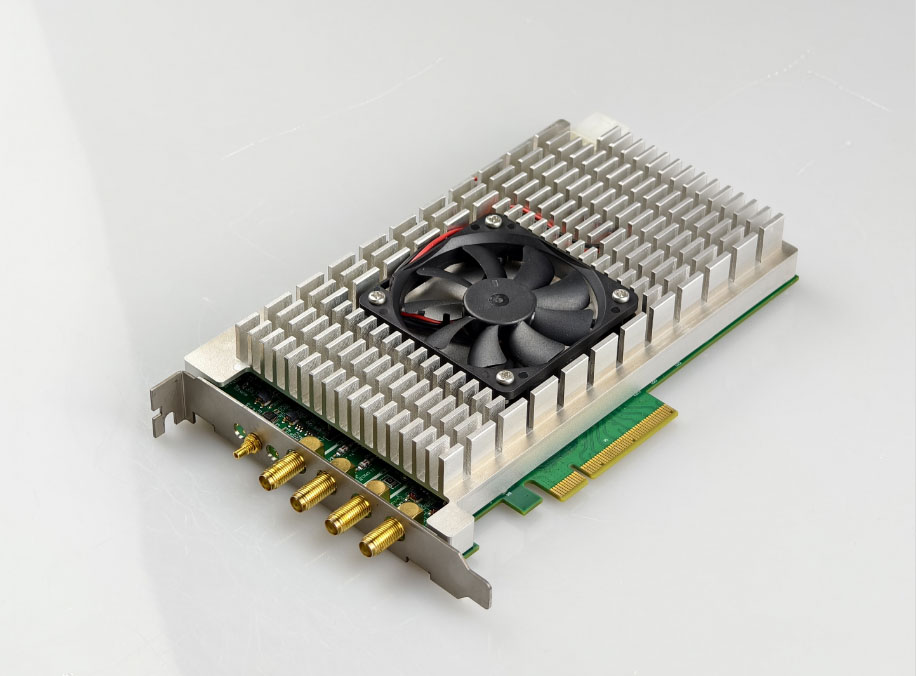
View more details about DAS capture cards
Related Content
- Wiring Diagram for the Acquisition Card
- GY-DAQ-2480 API Interface Development Documentation
- Data Acquisition Card Documentation Downloads
- Installation Guide for PCIe DAS Acquisition Cards
- Capture Card Testing Software
- How to Connect the GY-DAQ-2480 to a DAS Module
- FAQ for the GY-DAQA-2510 High-Speed DAS Acquisition Card
- Data Acquisition Card Product Specifications