Laser Modules for Sensing & Telecom
Stable laser sources from ultra-narrow linewidth CW and FMCW tunable modules to high-peak-power nanosecond pulsed lasers — core light sources for DAS/DVS interferometric sensing, Raman DTS, coherent LiDAR, wind radar, test instrumentation and analog RF-over-fiber links.
- <3 kHz linewidth UNL-1550 single-frequency for DAS/DVS
- 30 W peak pulsed NSFL-30 for Raman DTS (5–120 ns)
- FMCW tunable LiDAR & coherent detection (UNL-C-T)
- 1064 nm & ROF Butterfly lasers, ASE & analog Tx
Laser Products by Application
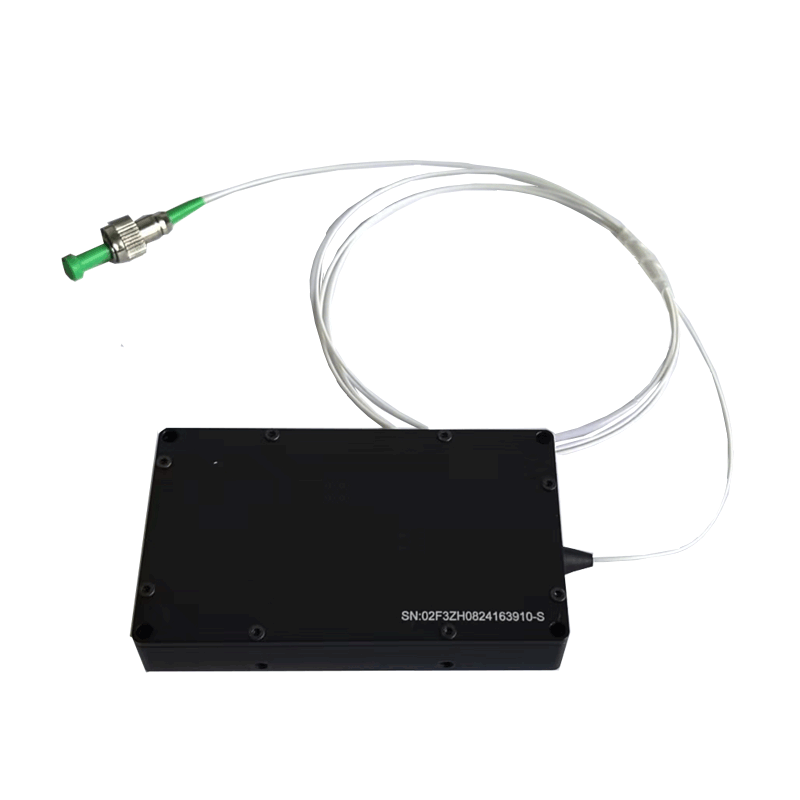
Ultra-Narrow Linewidth CW Lasers (1550 nm)
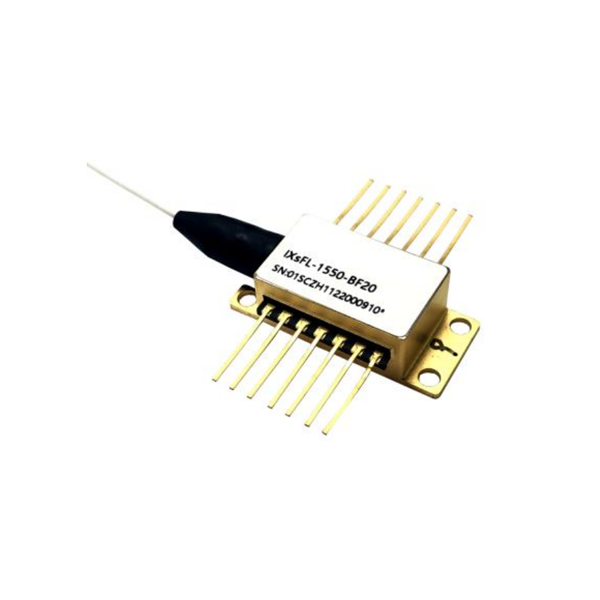
Single-frequency sources for distributed acoustic/vibration sensing, coherent detection and precision metrology — from compact UNL modules (<3 kHz) to butterfly-packaged chips and custom multi-wavelength narrow-linewidth builds for DVS/DAS and wind LiDAR.
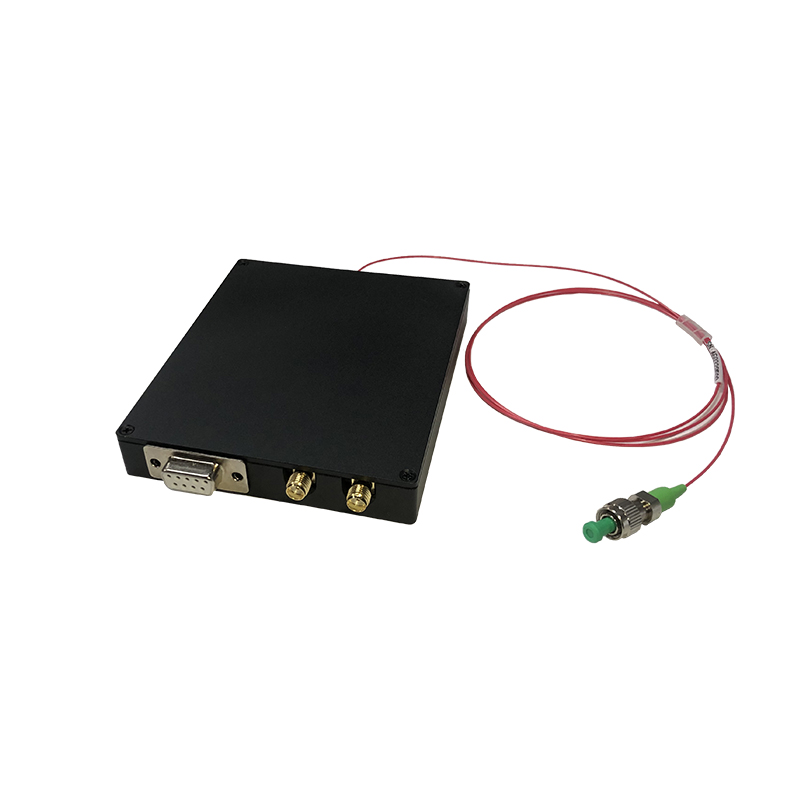
FMCW Tunable Lasers for LiDAR & Coherent Sensing
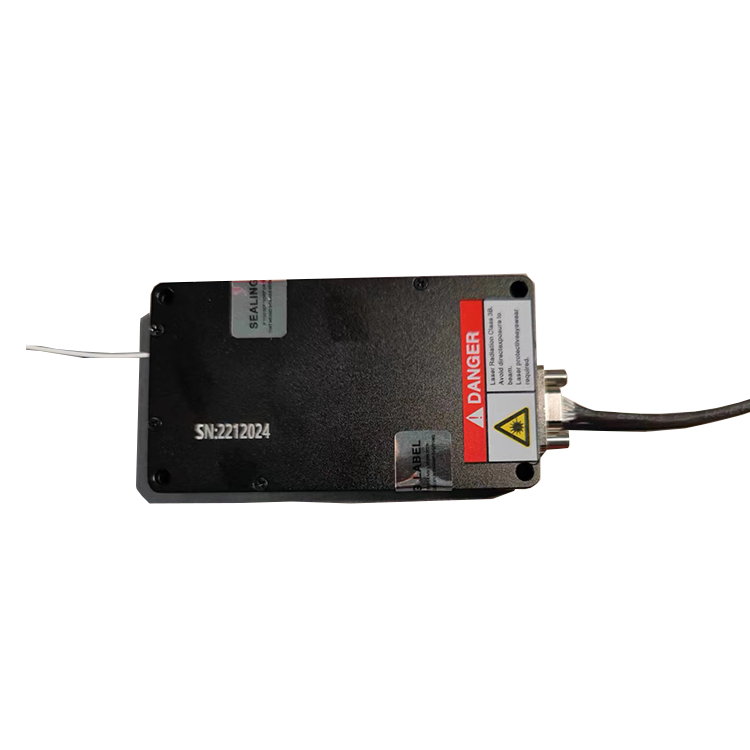
Frequency-swept narrow-linewidth modules with ultra-low RIN and high tuning linearity for FMCW LiDAR, coherent optical detection, 3D mapping and distributed fiber sensing research.
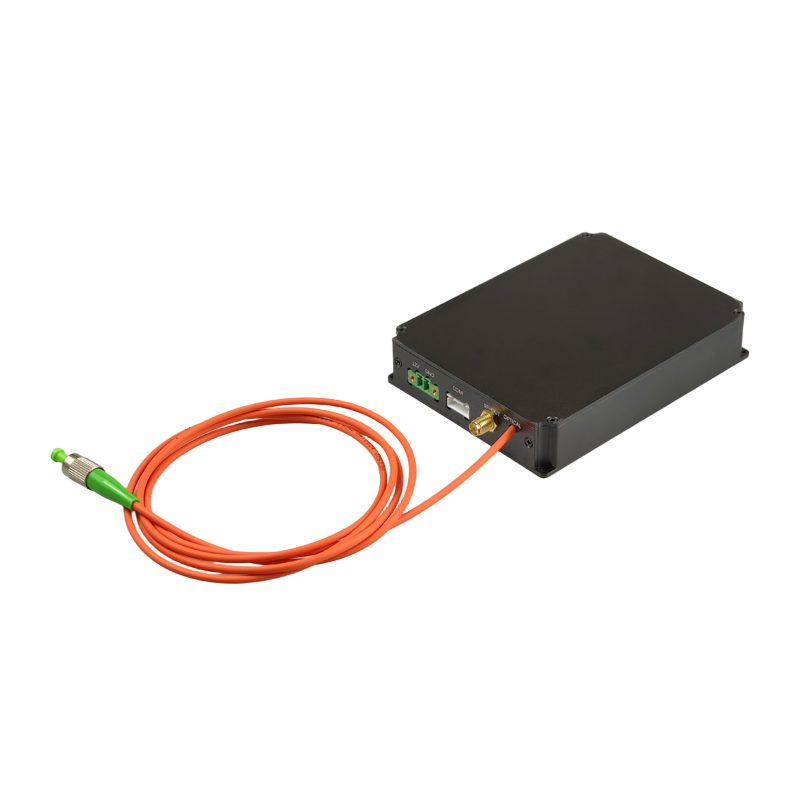
Nanosecond Pulsed Lasers for DTS
High peak-power 1550 nm pulsed sources for Raman distributed temperature sensing — adjustable pulse width (5–120 ns), up to 30 W peak, Modbus RTU control. Pair with DTS modules and DTS DAQ cards.
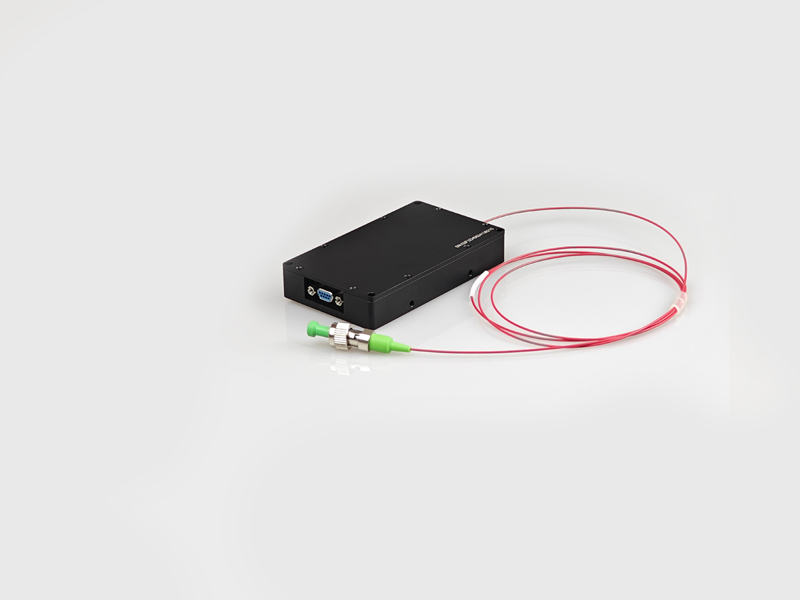
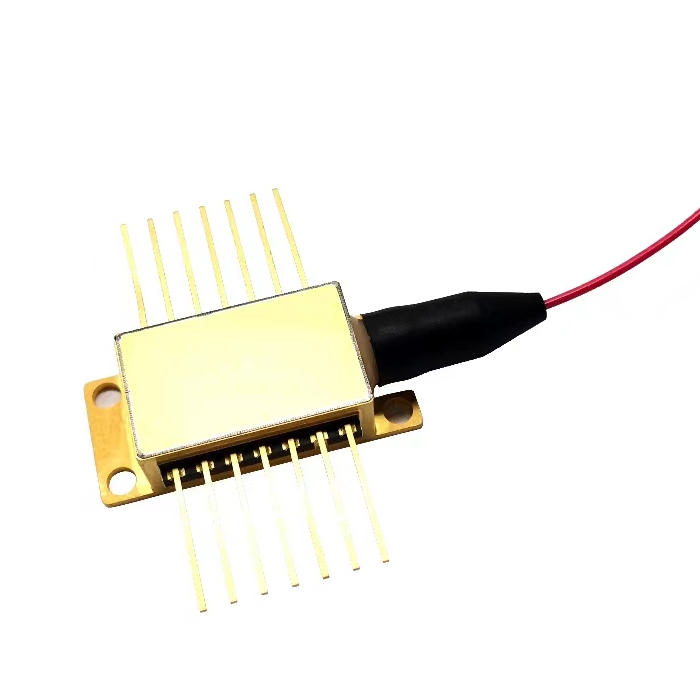
1064 nm Narrow Linewidth Lasers
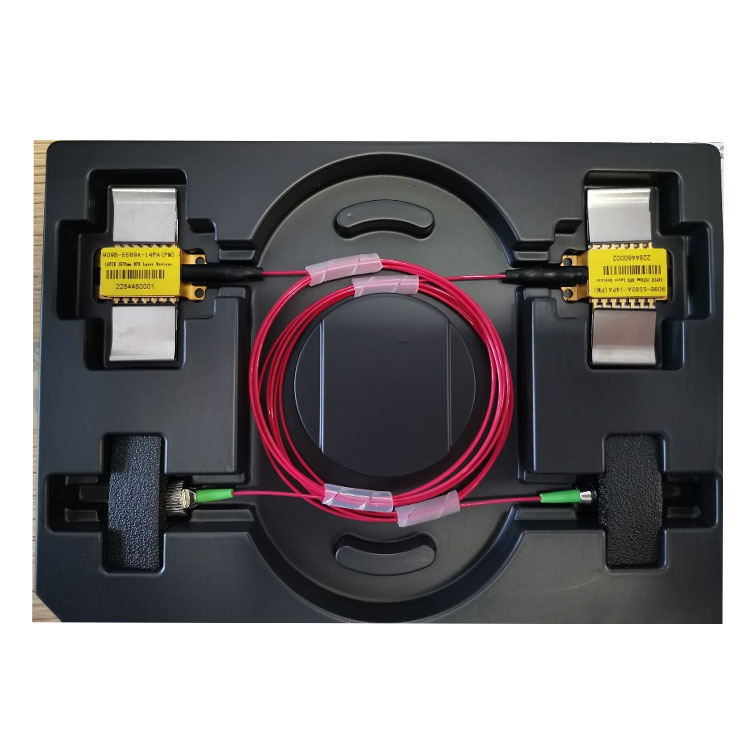
~1064 nm single-frequency modules for LiDAR, coherent detection and sensing at Yb band — compact UNL module or 14-pin butterfly package for OEM integration.
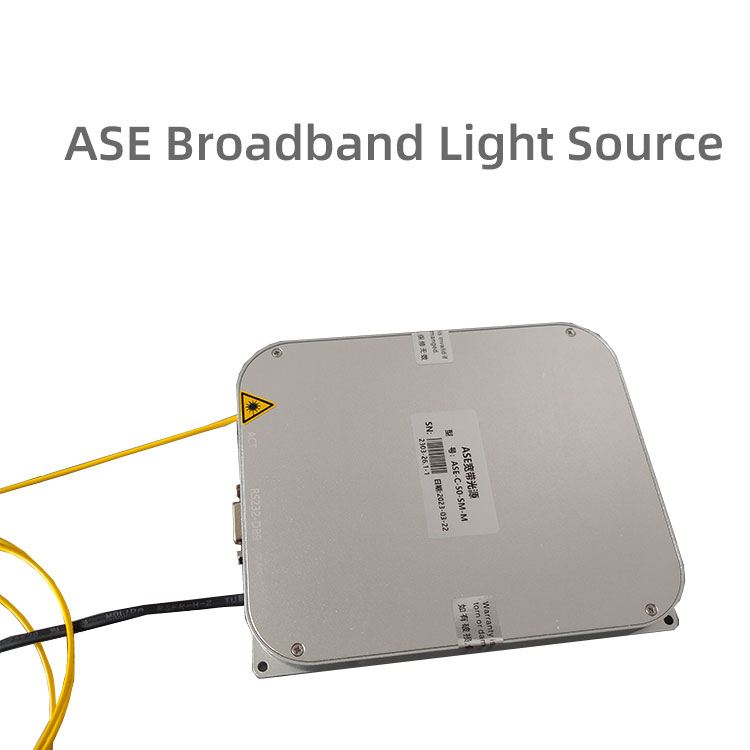
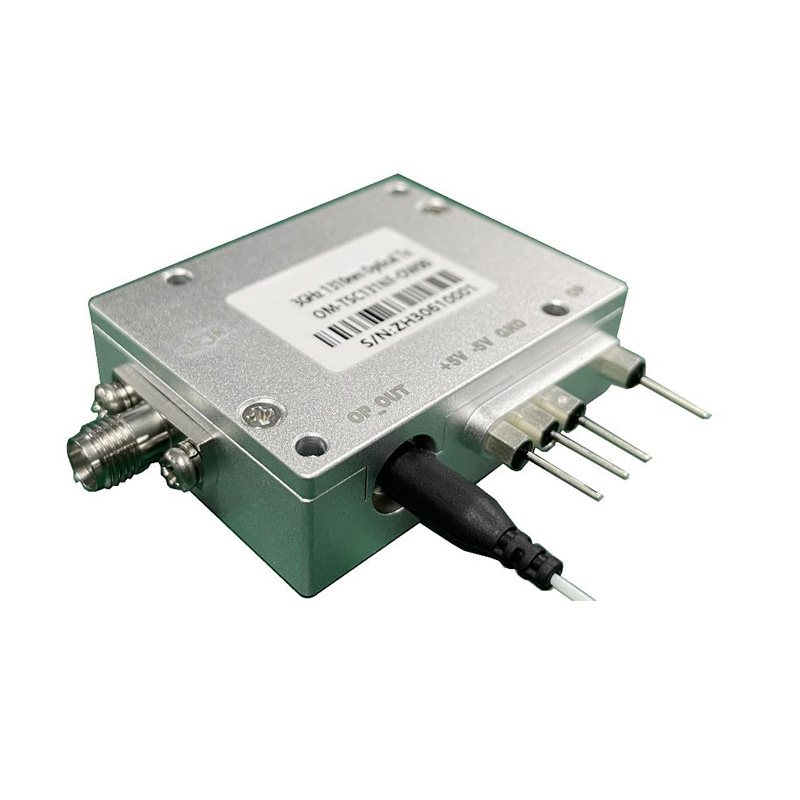
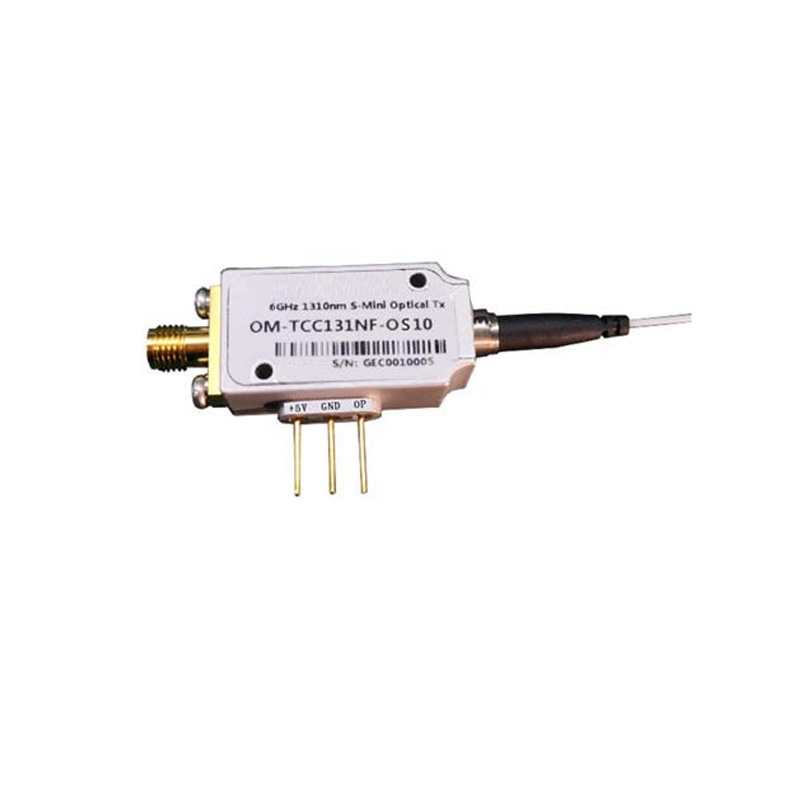
ASE Sources & Analog Optical Transmitters (ROF)
C-band ASE broadband sources for test and sensing front-ends, plus coaxial and S-mini analog optical transmitters (10 MHz–21 GHz) for RF-over-fiber, distributed antenna systems and secure communication links.
How to Choose the Right Laser Module
- Building DAS or DVS interferometric sensing? Choose UNL-1550-3-20 (<3 kHz, compact module) or GYsFL-1550-BF20 (≤2 kHz butterfly) as the stable single-frequency seed — pair with our AOM and DAS integration modules.
- Assembling a Raman DTS optical front-end? NSFL-30 delivers 30 W peak, 5–120 ns pulses at 1550 nm — designed for DTS temperature measurement; see DTS Applications for full component list.
- FMCW LiDAR or frequency-swept coherent detection? UNL-C-T-M-C34 offers configurable GHz tuning ranges, ≤15 kHz Lorentz linewidth and ultra-low RIN for radar/LiDAR waveforms.
- Need 1064 nm instead of C-band? UNL-1064-20 (module) or UNL-1064-20-BF20 (14-pin butterfly) at ≤20 kHz linewidth, 20 mW.
- Cost-sensitive or high-power DFB integration? ML20550KK14Z600L — 100 kHz linewidth, 70 mW, 14-pin butterfly for LiDAR and sensing OEMs.
- Multiple custom wavelengths for DVS/wind radar? UNL-C-F-M-C34 supports small-volume orders: 1–10 kHz linewidth, 1510–1590 nm, 20 mW.
- RF-over-fiber or wideband analog link? OM-TxC coaxial transmitter (TEC, up to 21 GHz) or S-mini pigtail variant for DAS/ROF nodes.
For complete system guidance, see How to Build a DAS System, DTS Applications, or browse EDFA modules for long-range sensing links.
What Are Laser Modules for Fiber Sensing?
Fiber optic sensing systems rely on stable, low-noise laser sources whose linewidth and intensity directly affect measurement range and sensitivity. DAS and DVS need ultra-narrow linewidth CW lasers (typically 1550 nm) to maintain coherent backscatter over kilometers. DTS uses high-peak-power nanosecond pulses to generate Raman anti-Stokes/Stokes signals along sensing fiber. LiDAR and coherent detection may require FMCW-tunable or 1064 nm sources depending on system architecture.
YB Photonics laser portfolio spans UNL ultra-narrow modules, pulsed NSFL DTS lasers, FMCW tunable units, DFB butterfly chips, ASE test sources and analog optical transmitters for telecom-style links — designed to integrate with our AOM modules, EDFAs, DAS/DVS hardware and photodetector product lines.
Key Specifications to Compare
| Parameter | Why it matters | Typical range in this category |
|---|---|---|
| Wavelength | Must match sensing link and components | 1550 nm C-band (most); 1064 nm; ASE 1528–1563 nm |
| Linewidth | Coherent sensing range & phase noise | <3 kHz (UNL-1550) to 100 kHz (DFB butterfly) |
| Output type | CW vs pulsed vs FMCW swept | CW, 5–120 ns pulses (NSFL-30), GHz tuning (UNL-C-T) |
| Peak / CW power | DTS pulse energy vs DAS continuous level | 10–20 mW CW; up to 30 W peak (DTS pulsed) |
| Package | Lab module vs OEM butterfly vs ROF transmitter | Compact UNL box, 14-pin butterfly, coaxial OM-Tx |
| Primary use | Application fit | DAS/DVS, DTS, LiDAR, wind radar, ROF/DAS |
Frequently Asked Questions
- Which laser do I need for DAS vs DTS?
- DAS/DVS requires a stable narrow-linewidth CW laser (e.g. UNL-1550-3-20) combined with pulse generation via AOM. DTS Raman sensing needs a high-peak nanosecond pulsed source such as NSFL-30 — not a CW laser alone.
- What is the difference between UNL-1550-3-20 and GYsFL-1550-BF20?
- Both are ultra-narrow ~1550 nm single-frequency sources. UNL-1550-3-20 is a compact integrated module (<3 kHz, FC/APC, DB9). GYsFL-1550-BF20 is a 14-pin butterfly chip (≤2 kHz) for mounting in your own chassis or TEC driver board.
- When is 100 kHz linewidth (ML20550KK14Z600L) sufficient?
- For many LiDAR, power delivery and non-interferometric sensing tasks where sub-kHz coherence is not required. Interferometric DAS/DVS over long fiber typically needs kHz-class or narrower linewidth (UNL series).
- Are OM-Tx optical transmitters the same as sensing lasers?
- No — OM-Tx modules are analog RF-over-fiber transmitters that intensity-modulate an internal laser with wideband RF (10 MHz–21 GHz). They serve telecom/ROF links rather than as the coherent seed for DAS interferometry.