High-Speed Photodetector Modules
Ultra-fast photodetector modules for capturing nanosecond and sub-nanosecond optical transients — multi-GHz bandwidth fiber-coupled receivers and amplified visible detectors for high-speed data links, optical communications test, pulsed laser characterization, LiDAR prototyping and advanced laboratory sensing.
- 6 – 40 GHz Multi-bandwidth DMX60 options
- 800 – 1650 nm InGaAs fiber-coupled band
- Fiber input Low-capacitance FC coupling
- Visible GHz DMX61 amplified Si 500–870 nm
High-Speed Photodetector Products by Application
Multi-GHz Fiber-Coupled Photodetectors
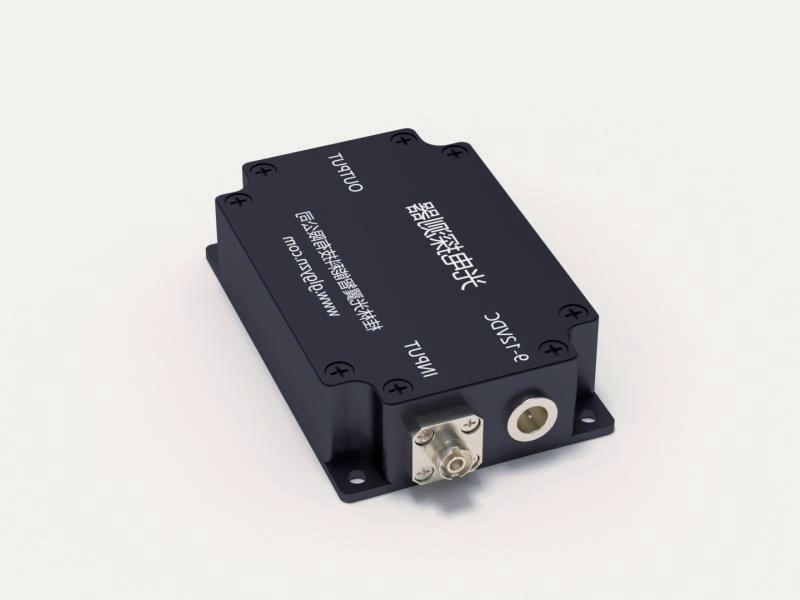
DMX60 series ultra-fast photodetectors with fiber optic input — selectable bandwidths from 6 GHz to 40 GHz across 800–1650 nm. Direct photodiode output without on-board amplification, suited to telecom bit-error-rate test, optical modulation analysis and GHz-class research setups where external amplification or digitizers define the receive chain.
Amplified High-Speed Visible Photodetectors
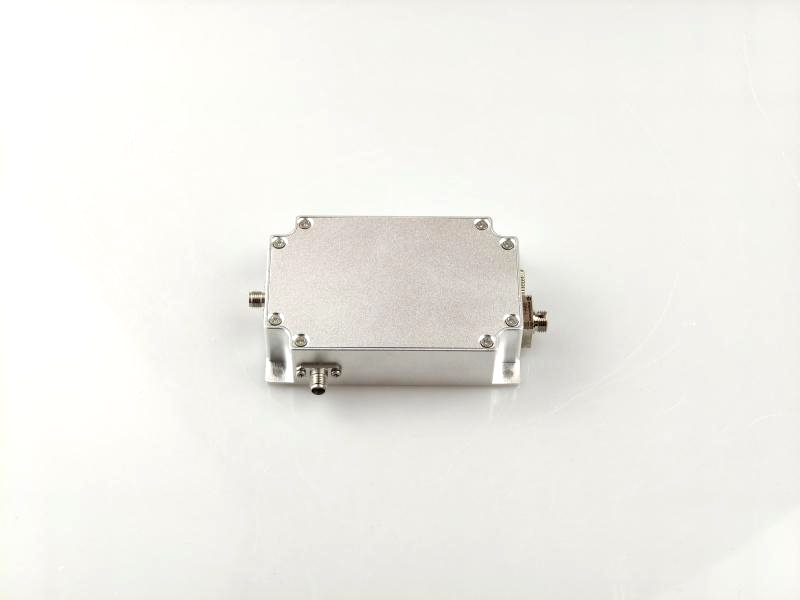
DMX61 combines high-speed silicon photodetection with integrated gain amplification — 18 GHz class bandwidth with visible-wavelength coverage (500–870 nm) for pulsed green/red laser characterization, free-space optical experiments and visible-band high-speed acquisition where a built-in TIA simplifies bench wiring.
How to Choose a High-Speed Photodetector
- Multi-GHz fiber optic test (800–1650 nm, 6–40 GHz)? DMX60 — pick the bandwidth variant (6G / 12G / 18G / 24G / 40G) to match your modulation rate or pulse rise-time requirement; fiber-coupled input, no integrated amplifier.
- Visible-band high-speed detection with built-in amplification? DMX61 — 18 GHz class amplified Si photodetector for 500–870 nm pulsed or modulated sources.
- ~1 GHz InGaAs fiber receiver for sensing or comms? See PD11 in PIN Amplified Photodetectors — lower cost 1 GHz AC-coupled module vs multi-GHz DMX60.
- 1 GHz balanced heterodyne or OCT? BPD480 balanced photodetector offers 1 GHz differential detection with high CMRR — different architecture from single-ended DMX series.
- MHz–GHz APD for weak pulsed returns? Consider APD modules (e.g. APD210) when avalanche gain improves SNR more than raw GHz bandwidth alone.
- Custom TIA or bare photodiode integration? See transimpedance amplifier modules and photodiode components for OEM receiver design.
What Are High-Speed Photodetector Modules?
High-speed photodetectors convert fast-varying optical power to electrical signals with bandwidth high enough to preserve nanosecond pulses or multi-Gb/s modulation. Key design factors include photodiode capacitance, matching network, and coupling method — fiber input (as on DMX60) minimizes parasitics for telecom-band measurements.
YB Photonics DMX series targets laboratory and R&D users who need GHz-class temporal resolution: DMX60 for unamplified multi-GHz fiber receivers across 800–1650 nm, and DMX61 for amplified visible high-speed detection. For sub-GHz sensing receive paths, compare with PIN modules (PD12, PD11), balanced detectors (BPD480), and APD modules in adjacent categories.
Key Specifications to Compare
| Parameter | Why it matters | Typical range in this category |
|---|---|---|
| Bandwidth (3 dB) | Must exceed signal frequency content | 6 – 40 GHz (DMX60 variants); ~18 GHz (DMX61) |
| Wavelength | Detector material & responsivity band | 800–1650 nm (DMX60); 500–870 nm Si (DMX61) |
| Input coupling | Fiber vs free-space path | Fiber optic input (DMX60); visible free-space/fiber (DMX61) |
| Amplification | Direct PD current vs voltage output | No on-board amp (DMX60); integrated gain amp (DMX61) |
| Rise / fall time | Pulse fidelity for LiDAR & laser test | Sub-ns to tens of ps (bandwidth dependent) |
| Output interface | Connection to scope or digitizer | 50 Ω RF (SMA/K connector — confirm per model) |
Frequently Asked Questions
- DMX60 vs DMX61 — what is the difference?
- DMX60 is a multi-GHz fiber-coupled photodetector family (6–40 GHz options) for 800–1650 nm without integrated amplification. DMX61 adds gain amplification for high-speed visible (500–870 nm) silicon detection at ~18 GHz class bandwidth.
- How do I select the right DMX60 bandwidth?
- Choose a 3 dB bandwidth at least 1.5× your fundamental modulation frequency or equivalent to the inverse of your target pulse rise time. Contact YB Photonics for the specific 6G / 12G / 18G / 24G / 40G variant matching your experiment.
- Are DMX modules suitable for DVS/DAS demodulation?
- Multi-GHz DMX60 is oriented to telecom and ultrafast optical test. Most DVS/DAS coherent demodulation uses balanced photodetectors and PIN/APD receivers in the MHz–GHz range matched to interrogator design — confirm architecture before ordering.
- Do high-speed modules include calibration data?
- Responsivity and bandwidth vary by wavelength and bandwidth grade. Request datasheet and typical frequency response when ordering for quantitative pulse or eye-diagram measurements.