EDFA Fiber Amplifier Modules for Sensing
Erbium-doped fiber amplifiers and Raman amplification modules for boosting pulse energy and extending measurement range in DAS, DVS and long-haul fiber sensing — from pulsed EDFA after the AOM to small-signal pre-amps, integrated EDFA+Raman units, and standalone Raman modules for 40 km-class distributed vibration systems.
- Pulsed EDFA Amplify gated pulses after AOM
- Up to ~40 km DVS/DAS EDFA + Raman integration
- C-band 1550 nm SMF-28 FC/APC interfaces
- Modbus / RS232 Module control & monitoring
Amplifier Products by Application
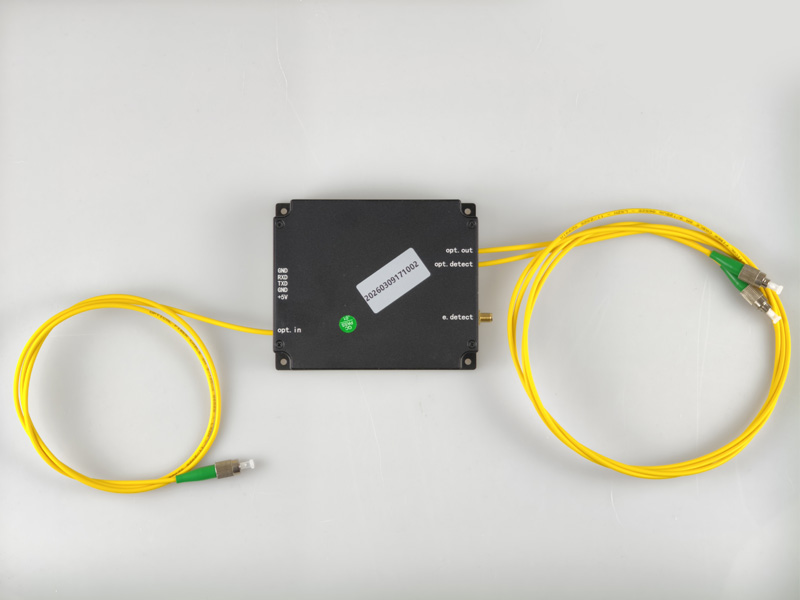
Pulsed EDFA for DAS & DVS
High-speed pulsed erbium-doped fiber amplifiers placed after the acousto-optic modulator to boost nanosecond sensing pulses — typical stack: narrow-linewidth laser → AOM → EDFA-P → sensing fiber. Suitable for ~20 km-class DAS/DVS links.
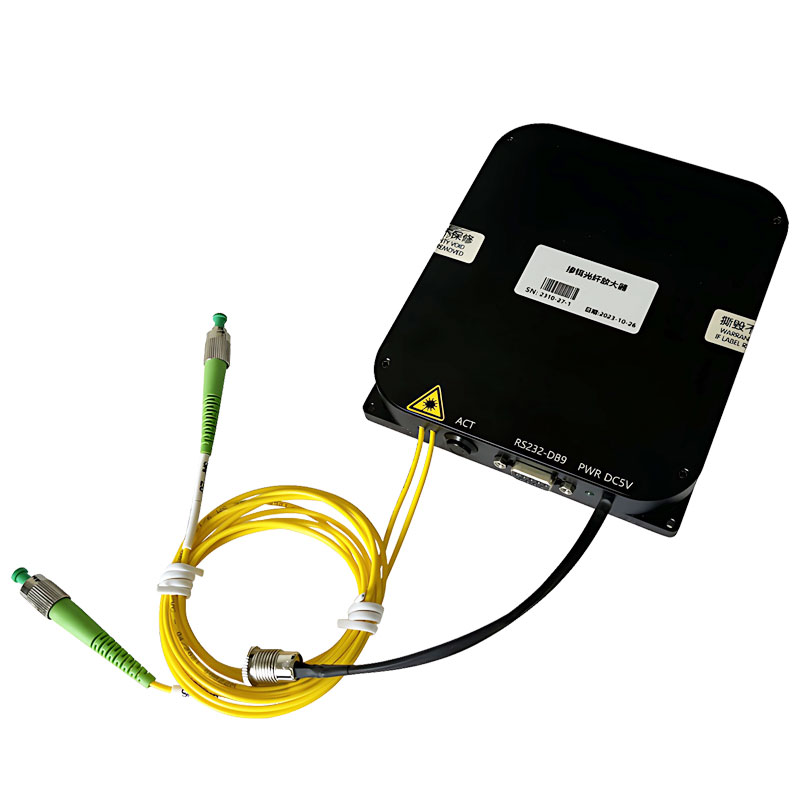
Small-Signal & Pre-Amplifier EDFA
Low-noise C-band EDFA for weak signal amplification and receiver-side pre-amplification in fiber sensing and test setups — high gain (35–45 dB small-signal), RS232 control, compact benchtop module.
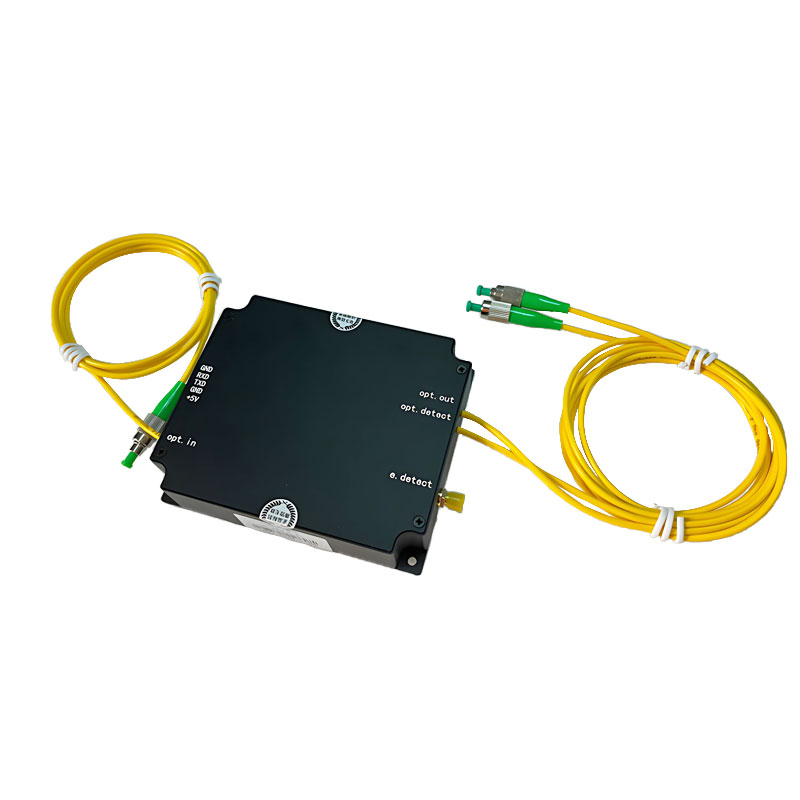
Integrated EDFA + Raman for Long-Range Sensing
Single module combining pulsed EDFA and Raman amplification — reduces chassis complexity vs separate boxes, with backlight detection. Targeting ultra-long-range DAS/DVS (up to ~40 km per product specification).
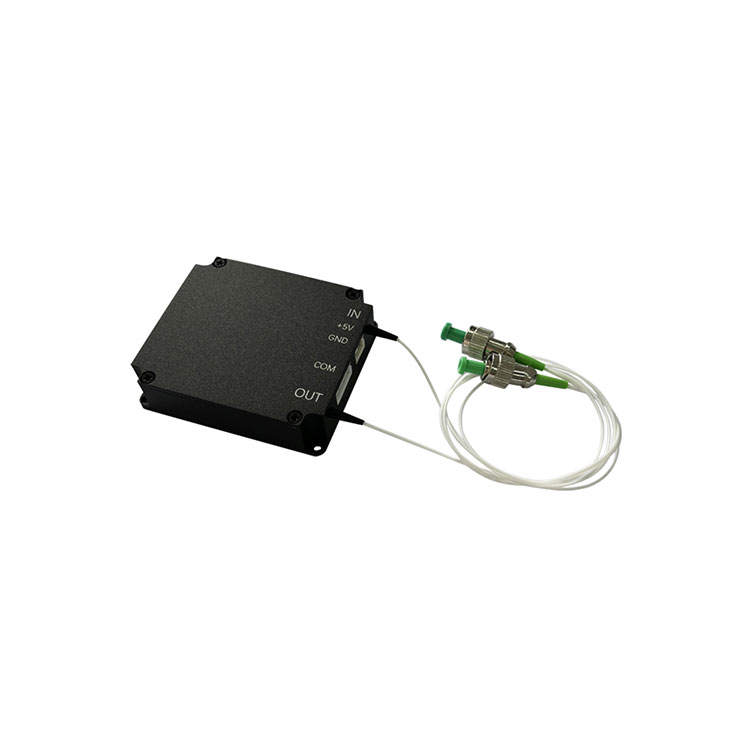
Raman Amplifier Modules
Standalone Raman pump modules for amplifying weak return light at the far end of sensing fiber — extends DVS/DAS reach when paired with launch-side EDFA. Compact 60×52×15 mm form factor, Modbus RTU control.
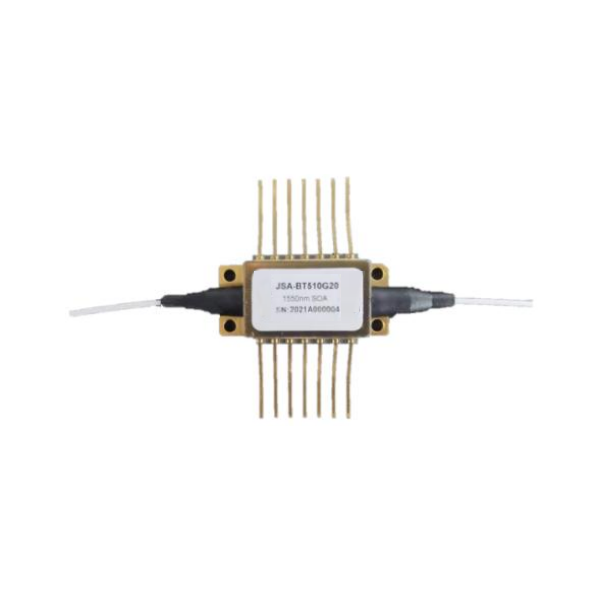
SOA Butterfly Modules
1550 nm semiconductor optical amplifier in 14-pin butterfly package — chip-level gain block for OEM integrators building custom sensing or communication subsystems.
How to Choose EDFA & Raman Amplifiers
- Standard DAS/DVS launch amplification? EDFA-P pulsed EDFA after AOM — ~12 dB gain, Modbus control, matches common DAS integration modules optical chain.
- Need maximum sensing distance (~40 km)? GY-EDFA-PL-RA combines pulsed EDFA + Raman in one module; alternatively pair EDFA-P with GY-RA Raman on the return path for custom long-range designs.
- Amplifying weak CW or received signals? EDFA-S small-signal pre-amp (35–45 dB gain at low input) for lab links or receiver front-ends — not for high-peak pulsed launch after AOM.
- Building your own amplifier board? JSA-BT515G25 SOA butterfly provides chip-level 1550 nm gain; you supply TEC and drive electronics.
- DTS Raman temperature sensing? DTS often uses a dedicated pulsed laser (NSFL-30) rather than CW + AOM + EDFA — see DTS modules and DTS Applications.
- Full DAS optical chain? See How to Build a DAS System — laser, AOM, EDFA, module and DAQ together.
What Are EDFA Modules for Fiber Sensing?
An erbium-doped fiber amplifier (EDFA) boosts optical signal power in the 1530–1565 nm C-band by pumping erbium-doped fiber — essential when distributed sensing pulses would otherwise lack energy to interrogate long fiber spans. In DAS/DVS, a pulsed EDFA typically follows the AOM, amplifying each gated pulse launched into sensing cable. Raman amplification can further extend reach by pumping the fiber to amplify weak backscatter or return signals.
YB Photonics offers pulsed EDFA (EDFA-P), small-signal pre-amps (EDFA-S), integrated EDFA+Raman (GY-EDFA-PL-RA), standalone Raman modules (GY-RA), and SOA butterfly chips — designed to work with our lasers, AOMs and DAS/DVS hardware.
Key Specifications to Compare
| Parameter | Why it matters | Typical range in this category |
|---|---|---|
| Amplifier type | Pulsed launch vs pre-amp vs Raman | EDFA-P (pulsed), EDFA-S (small-signal), GY-RA (Raman) |
| Wavelength band | Must match sensing laser/AOM | C-band 1530–1565 nm (1550 nm typical) |
| Gain | Launch pulse energy or weak signal boost | ~12 dB (EDFA-P); 35–45 dB (EDFA-S at low input) |
| Integration | Separate modules vs EDFA+Raman combo | EDFA-P alone (~20 km); GY-EDFA-PL-RA (~40 km class) |
| Control interface | Host monitoring and setup | Modbus RTU (EDFA-P, GY-RA, GY-EDFA-PL-RA); RS232 (EDFA-S) |
| Fiber interface | System patching | SMF-28, FC/APC typical |
Frequently Asked Questions
- Where does EDFA-P sit in a DAS optical chain?
- Typically after the AOM that gates the CW laser into pulses, before the launch into sensing fiber — it amplifies each pulse, not the continuous laser before modulation.
- EDFA-P vs EDFA-S — what is the difference?
- EDFA-P is optimized for pulsed signal amplification in DAS/DVS launch paths. EDFA-S is a small-signal / pre-amplifier for weak CW or received light (high gain at low input power), suited to detection front-ends rather than high-peak pulse boost.
- When do I need Raman amplification?
- When EDFA alone cannot achieve target sensing distance — GY-EDFA-PL-RA integrates pulsed EDFA and Raman, or add GY-RA for return-path Raman gain in long DVS/DAS links (product literature cites 40 km+ class systems).
- Is EDFA used in DTS systems?
- Raman DTS commonly uses a high-peak pulsed laser and Raman detection chain rather than CW laser + AOM + EDFA — different architecture from DAS/DVS. See our DTS product and application pages for DTS-specific components.