DAS Acquisition Card | How Is It Different from Traditional Acquisition Cards?
2023-06-10 03:30:47
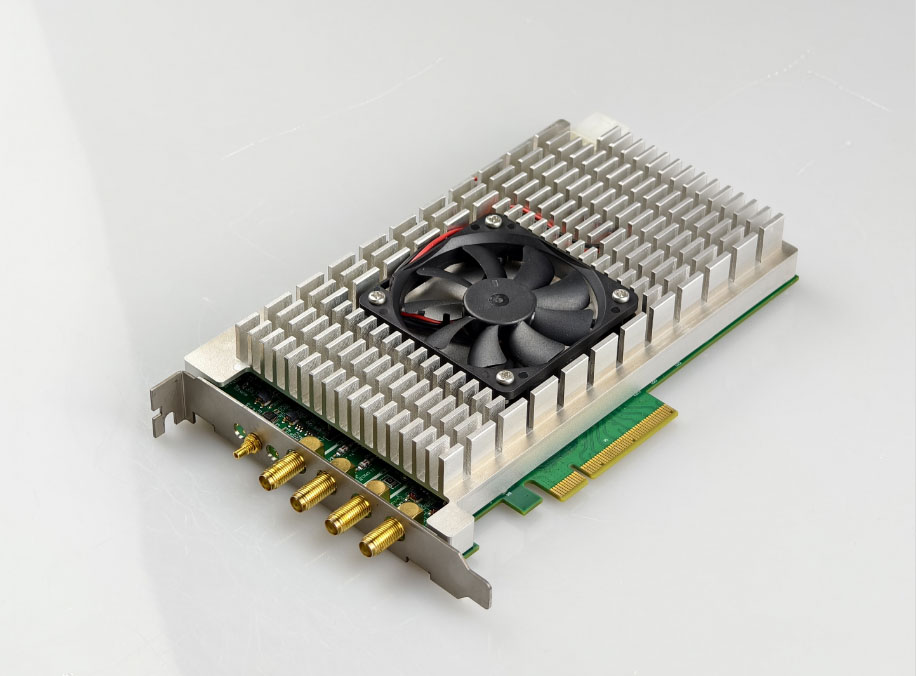
What is a DAS capture card?
A DAS acquisition card is a high-speed, integrated hardware solution designed specifically for distributed acoustic fiber-optic (DAS) sensing systems. If you are planning to implement a DAS sensing system, you should opt for a dedicated DAS acquisition card rather than modifying a standard acquisition card, as the former offers greater convenience and ease of use.
How does a DAS capture card differ from a traditional capture card?
Standard data acquisition cards, such as those from NI or ADLINK, are designed solely for "acquisition"—converting analog signals into digital data for output—leaving the rest of the processing to the host computer’s CPU. In contrast, DAS acquisition cards are specifically designed for fiber optic sensing systems. Below, we’ll examine the differences from a few of the most intuitive perspectives.
| Comparison items | Traditional General-Purpose Acquisition Card | DAS Acquisition Card |
|---|---|---|
| Purpose and Application | General-purpose signal acquisition, suitable for oscilloscopes, radar, biomedical applications, and more | Designed specifically for distributed optical fiber acoustic sensing systems, with demodulation capabilities |
| Sampling Rate/Resolution | There is a wide variety of options. | 250 MHz to 1 GHz, 14- to 16-bit high resolution, with matching analog bandwidth requirements |
| Core Algorithm | No built-in demodulation algorithm; raw data is transmitted to the host computer for processing by the CPU/GPU | On-board hardware IQ and de-entanglement demodulation algorithms directly output phase data, significantly reducing the CPU load |
| Data Transfer Interface | Primarily PCIe or Gigabit Ethernet | PCIe x8 (data transfer rate exceeding 2 GB/s) or 10 Gigabit Ethernet (10 Gb/s) |
| Development barriers | Once we have the data, we’ll need to develop the demodulation algorithm from scratch, which is a lot of work. | Built-in DAS demodulation, supports Windows, Linux, C, and Python; data is ready to use out of the box |
| Power Consumption and Size | higher | Optimized for low-power design, the Ethernet/fiber port models enable compact edge deployment |
Detailed Explanation
Built-in Algorithms: In addition to supporting raw data acquisition, DAS acquisition cards typically feature built-in I/Q demodulation capabilities, enabling them to directly demodulate the interference signals detected by coherent detection into phase data for output. In contrast, traditional acquisition cards only upload raw acquisition signals, requiring users to perform a series of operations—such as I/Q demodulation and unwrapping—on the host PC, which results in a significant amount of development and debugging work.
Development Barriers: The DAS capture card features a built-in phase demodulation algorithm module that provides coherent fading suppression and global demodulation. This eliminates the need for users to perform IQ demodulation and unwrapping after acquiring the data, significantly reducing development complexity and ensuring that the data is ready for use immediately upon reading.
Related Content
- DVS-ETH-100-2 API Documentation
- GY-DAQ-2480 Data Analysis and Sample Code for Capture Cards (Python)
- Installation Guide for PCIe DAS Acquisition Cards
- Wiring Diagram for the Acquisition Card
- DAS Acquisition Card | How Is It Different from Traditional Acquisition Cards?
- DAS Acquisition Card (GY-DAQ-2480-E) Product Overview
- How to Connect the GY-DAQ-2480 to a DAS Module
- Data Acquisition Card Documentation Downloads