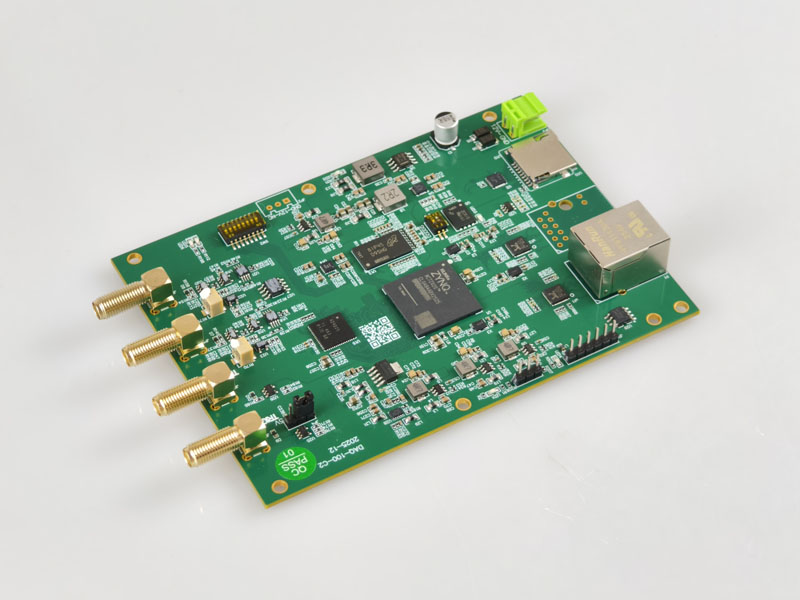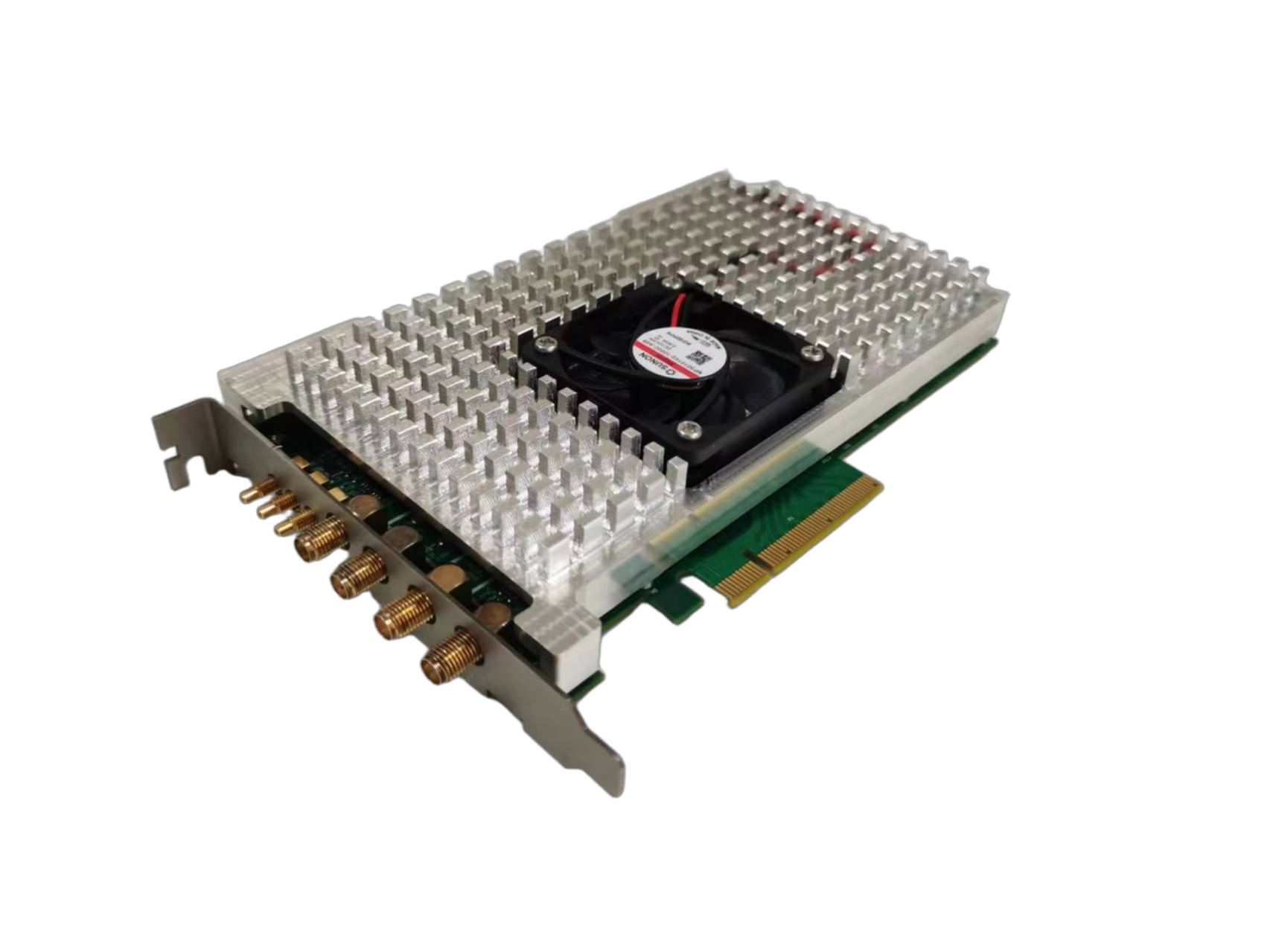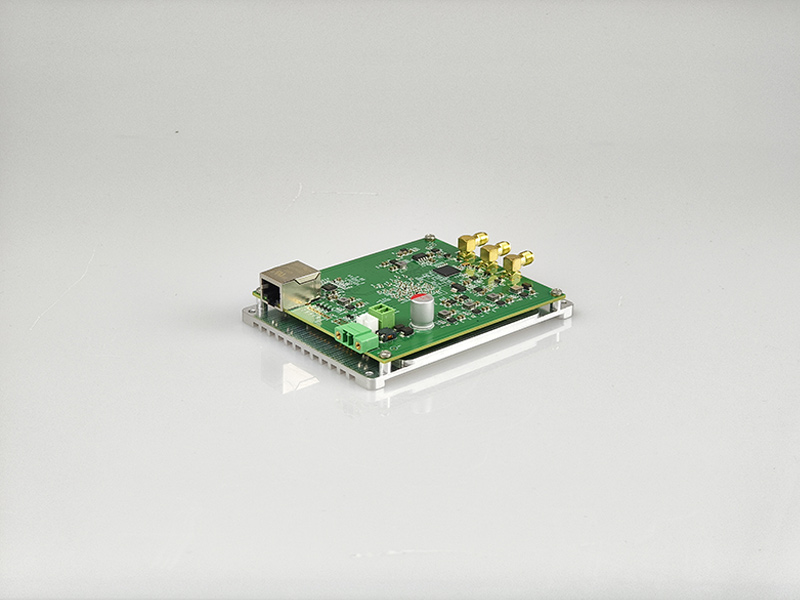
FPGA + ARM Integrated Embedded DAS High-Speed Demodulation Acquisition Card
DAS;DAQ;Acquisition Card;ARM;Embedded Data Acquisition Card;Portable DAS
 Huang
Email: Hqy@ybphotonics.com
Huang
Email: Hqy@ybphotonics.com
Introduction
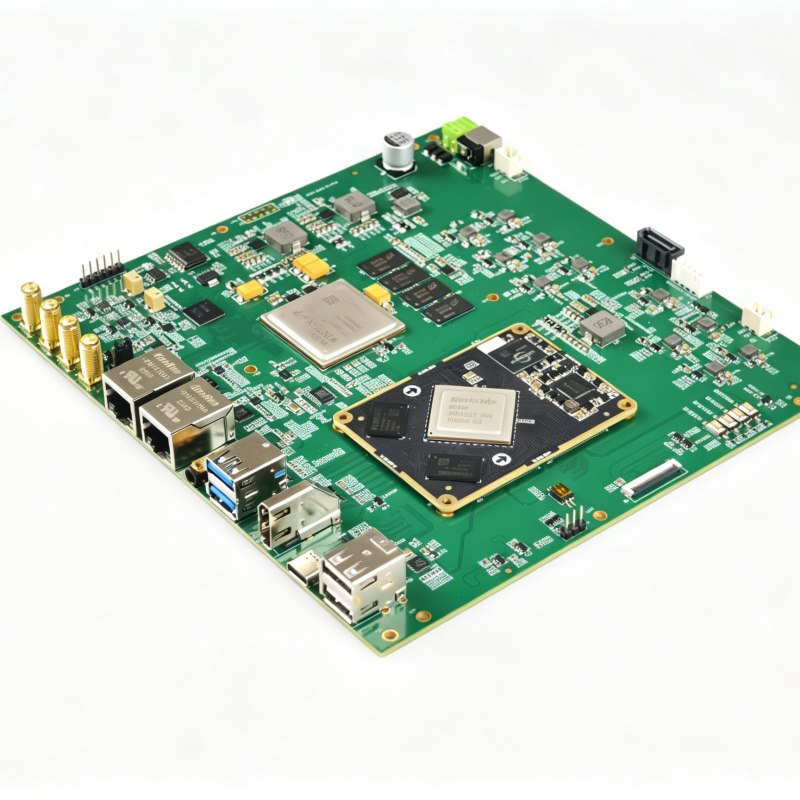
This is an all-in-one embedded DAS demodulation and data acquisition card featuring an RK3588 processor and a high-performance FPGA. It enables portable, on-site data processing and can independently perform the full range of fiber optic sensing operations, including data acquisition, demodulation, storage, display, and remote transmission.
1 Product Overview
1.1 Product Introduction
The GY-DAQ-2680 integrated embedded DAS demodulation and acquisition card is an integrated acquisition and processing unit featuring an on-board RK3588 processor and a high-performance FPGA, designed for distributed optical fibre acoustic sensing (DAS). It utilises PCIe 2.0 x4 to enable high-speed data exchange between the FPGA and the RK3588, eliminating the reliance on traditional x86 host computers and achieving full integration of the entire process, including signal acquisition, phase demodulation, local computation, data storage, human-machine interaction and network transmission.
It features an on-board dual-channel 14-bit high-speed ADC with 250 MSps synchronous sampling and a built-in hardware phase demodulation algorithm, outputting raw sample data as well as demodulated amplitude and phase data. The phase data can be directly equated to vibration signals, eliminating the need for secondary de-entanglement in the back end and significantly reducing the system’s computational requirements. Leveraging the RK3588’s high-performance, low-power octa-core architecture, coupled with a rich array of peripheral interfaces, the device is compact and energy-efficient, making it suitable for outdoor fibre-optic cable detection, portable handheld DAS equipment and miniaturised on-site monitoring systems.
Compared to traditional solutions comprising separate FPGA acquisition cards and industrial PCs, this product offers key advantages such as integrated design, low power consumption, compact size, operation without a host computer, local real-time processing and multi-interface expandability. It is capable of independently performing the full range of fibre optic sensing operations, including data acquisition, demodulation, storage, display and remote transmission.
1.2 Key Advantages
- Integrated heterogeneous architecture: The FPGA handles high-speed ADC acquisition and hardware demodulation, whilst the RK3588 handles local data processing, human-machine interaction, storage and network forwarding; high-speed on-board PCIe 2.0 x4 interconnect eliminates the need for an external industrial control host;
- Native DAS Hardware Demodulation: Built-in coherent fading suppression and global phase de-entanglement modules; the output phase data serves directly as vibration signals, reducing system development complexity;
- Low Power Consumption and Compact Design: Embedded ARM architecture ensures the system’s power consumption is significantly lower than that of traditional x86 acquisition solutions, making it suitable for battery-powered handheld and outdoor devices;
- Extensive integrated peripherals: dual Gigabit Ethernet, 4 USB ports, HDMI display, audio and SATA storage, supporting touchscreen human-machine interaction;
- Ultra-long-distance data acquisition: dual-channel synchronous acquisition, supporting DAS monitoring over optical fibre cables of more than 100 km;
- Cross-platform compatibility: the RK3588 runs an embedded Linux system, providing a complete SDK, drivers and secondary development examples;
- High-fidelity analogue front-end: 14-bit high resolution, 88 dBc spurious-free dynamic range, ensuring stable signal acquisition accuracy.
1.3 Typical Application Scenarios
- Outdoor long-distance optical fibre route detection equipment
- Portable handheld DAS optical fibre vibration monitor
- Compact, edge-based optical fibre security and pipeline monitoring systems
- Low-power optical fibre sensing data acquisition terminals for field use without an external power supply
- Equipment for on-site real-time demodulation, local data storage and local visualisation monitoring
2 Hardware Architecture and Key Parameters
2.1 Heterogeneous Processing Units
2.1.1 FPGA Acquisition and Demodulation Unit
| Parameter Items | Specifications |
|---|---|
| ADC Channels | Dual-channel synchronous acquisition (Ch1/Ch2) |
| ADC Resolution | 14-bit |
| Sampling Rate | 250 MSps dual-channel synchronous real-time sampling |
| Analogue Input | DC-coupled, 50 Ω standard RF input impedance |
| Input Voltage Range | 2 Vpp |
| Analogue Bandwidth | 0–100 MHz |
| Adjustable Offset | ±1 V, software-adjustable, maximising ADC range utilisation |
| Dynamic Performance | SFDR up to 88 dBc |
| Built-in Algorithms | Hardware full-phase demodulation, coherent fading suppression, polarisation diversity, global de-entanglement |
| Data Transmission Bandwidth | FPGA ↔ RK3588: PCIe 2.0 x4 |
| Trigger Functions | Trig-in: external 3.3 V trigger input; Trig-out: 3.3 V/5 V selectable acquisition pulse output |
2.1.2 RK3588 Embedded Controller
| Specification Items | Specifications |
|---|---|
| Main Processor | Rockchip RK3588 8nm octa-core processor (4×A76+4×A55) |
| GPU | Mali-G610 MP4, supporting HDMI display output and touchscreen rendering |
| NPU | 6 TOPS computing power, supporting local processing of AI vibration signal recognition and feature extraction |
| On-board Bus | PCIe 2.0 x4, for receiving FPGA-demodulated / raw sampling data |
| Operating System | Embedded Linux, supporting independent development of local applications |
2.2 Integrated Peripheral Interfaces (All on-board)
- Network interfaces: 2 Gigabit Ethernet ports, supporting local area networks, remote data upload and device networking;
- USB interfaces: 4 USB Host ports, allowing connection to touchscreens, USB flash drives, wireless modules and sensor peripherals;
- Display interface: 1 HDMI port, supporting touchscreen control and local real-time waveform/fibre-optic data visualisation;
- Audio Interface: 1 standard audio port, supporting audio output for vibration anomaly alarms;
- Storage Interface: 1 SATA 3.0 port, supporting external 2.5-inch hard drives for local high-capacity DAS data storage;
- RF Acquisition Channels: Ch1, Ch2 (MMCX RF interfaces);
- Trigger interfaces: Trig-in (external trigger input), Trig-out (synchronous trigger output).
2.3 Power Supply, Power Consumption and Environmental Specifications
| Parameter Category | Specifications |
|---|---|
| Input Power Supply | 12V DC |
| Maximum Power Consumption of the Unit | <30W |
| Operating Temperature | -20℃ to +60℃ |
| Storage Temperature | -40℃ to +85℃ |
| Dimensions | 184mm (L) × 176mm (W) × 26.9mm (D) |
3 On-board Interface Definitions
3.1 Acquisition Card Signal Interfaces
- Ch1: DAS acquisition channel 1, 50Ω RF input;
- Ch2: DAS acquisition channel 2, 50Ω RF input;
- Trig-in: External synchronisation trigger input, 3.3V level;
- Trig-out: Acquisition synchronisation pulse output, 3.3V/5V level, software-selectable;
3.2 Main Controller Peripheral Interfaces
- 2× Gigabit RJ45 Ethernet ports;
- 4× USB 2.0/3.0 multipurpose ports;
- HDMI display output;
- 3.5mm audio input/output ports;
- SATA hard drive interface;
- 12V DC power input terminal.
3.3 On-board Interconnect Bus
PCIe 2.0 x4: FPGA acquisition unit ↔ RK3588 controller unit, responsible for bidirectional high-speed exchange of demodulated data, raw sample data streams and control commands.
4 Software and Development Support
- Driver compatibility: Embedded Linux drivers are fully compatible with the RK3588 and the FPGA acquisition module;
- Operating modes
Mode 1: FPGA hardware demodulation mode, directly uploading amplitude and phase data; the phase is equivalent to the vibration signal;
Mode 2: Raw sample pass-through mode, where the RK3588 receives raw ADC data and the user implements a custom demodulation algorithm locally;
- Development resources: C/C++ SDK, Python development examples, waveform visualisation tools and touchscreen interface development templates are provided;
- Local functionality support: Local data caching, offline storage on a SATA hard drive, remote transmission via Gigabit Ethernet, AI-based vibration event recognition and integrated audible and visual alarms.