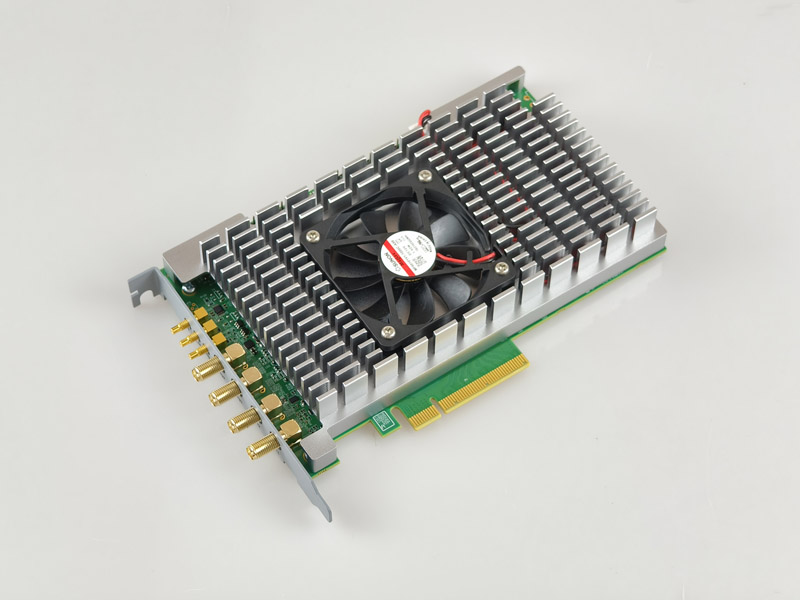
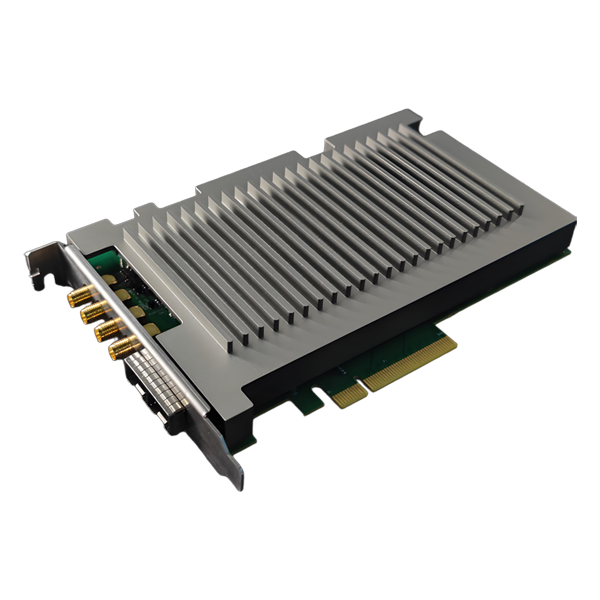
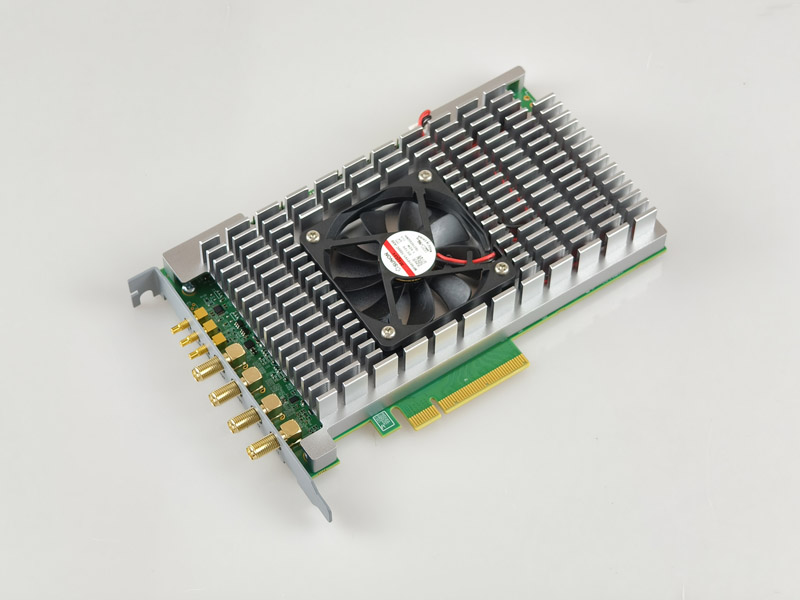
DAS Data Acquisition Card (GY-DAQ-2480-E) 250 MSps Ethernet/10G fibre port
The GY-DAQ-2480-E is a high-performance Ethernet-based DAS data acquisition card dedicated to distributed fibre optic acoustic sensing systems, featuring 250MSps 14-bit dual-channel synchronous trigger sampling and built-in coherent fading suppression demodulation algorithm. It supports Gigabit Ethernet or 10G optical port high-speed transmission, real-time upload of raw/demodulated data, and remote independent deployment for DAS data acquisition over distances exceeding 100 kilometres. The card realizes full-cable demodulation, with phase data directly available as vibration signals, reducing system CPU load and development complexity.
 Huang
Email: Hqy@ybphotonics.com
Huang
Email: Hqy@ybphotonics.com
 Download>>
1. Overview
The GY-DAQ-2480-E is a network interface-based DAS full-demodulation acquisition card featuring dual-channel 250 MSps synchronous trigger sampling.As a network interface DAS high-speed data acquisition card, it communicates with the host computer via Gigabit Ethernet or 10G optical ports. Utilising large-capacity data buffering and high-speed data transmission engine technology, it supports real-time uploading of raw and demodulated data. Data transfer rates reach up to 1000Mb/s, with optical port sampling transmission achieving 10Gb/s.The acquisition card employs a dual-channel 14-bit high-speed ADC with a sampling rate of 250 MSps, supporting DAS data acquisition over distances exceeding 100 kilometres.Featuring an integrated phase demodulation algorithm, it can directly upload amplitude-phase demodulated data. The phase data may be utilised directly by users as vibration signals without further demodulation processing, enabling full-cable demodulation. Alternatively, raw sampled data may be uploaded for user-conducted demodulation.
Compared to conventional IQ demodulation acquisition cards, this acquisition card incorporates an integrated phase demodulation algorithm module. This enables coherent fading suppression and global demodulation, significantly enhancing the accuracy and stability of the demodulated signal. It lays the foundation for subsequent signal processing and recognition. This eliminates the need for users to perform untwisting operations after acquiring data, reduces the system's CPU computational demands, and substantially lowers development complexity. It enables straightforward operation where data is ready for use upon reading, with phase directly representing vibration.
1.5 API Documentation And Software Downloads
2. System Block Diagram
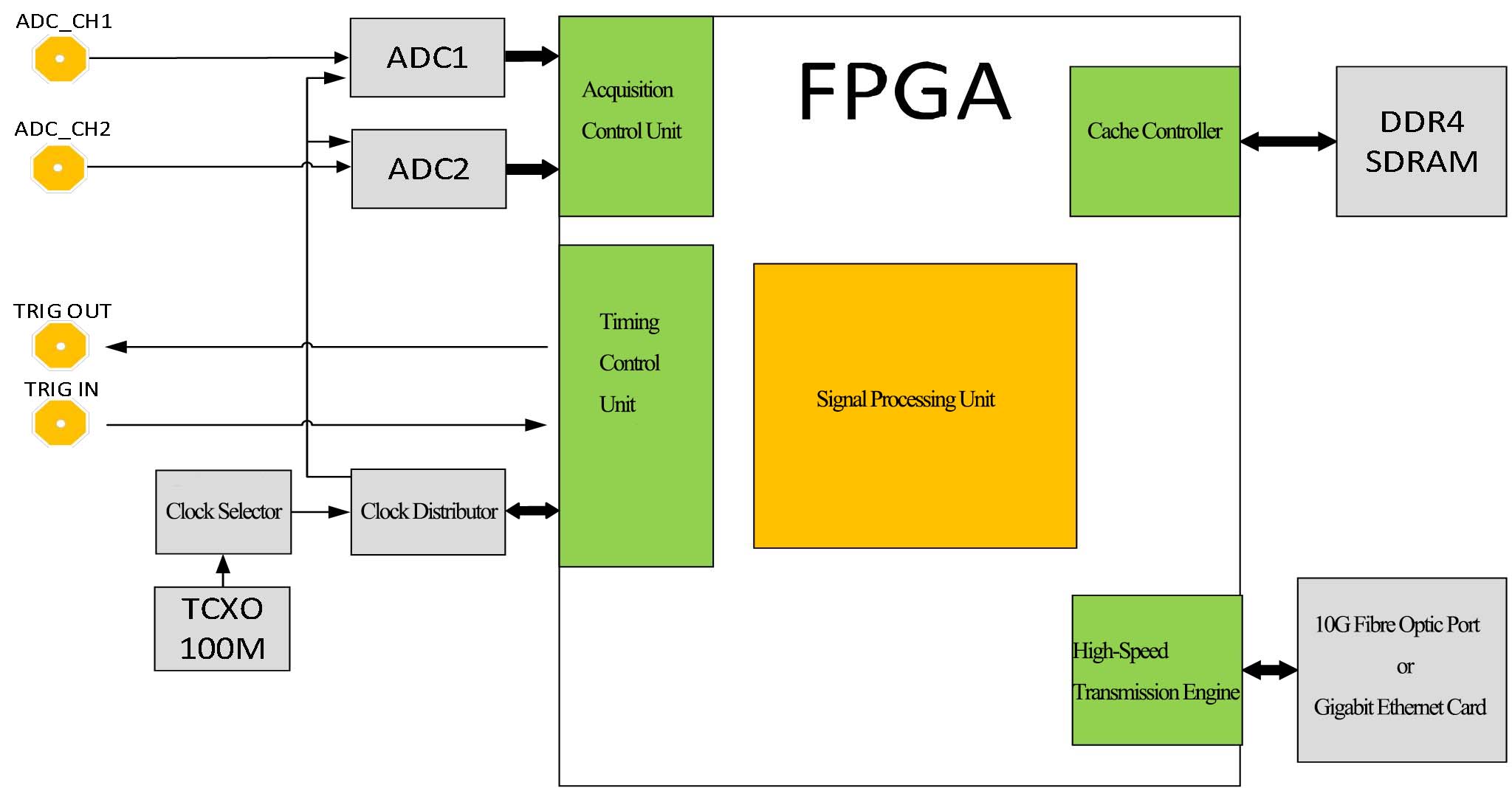
3. Specifications
- 14-bit dual-channel synchronous real-time sampling
- 250 MSps sampling rate
- DC-coupled, 50Ω input impedance
- 2 Vpp input voltage range
- Up to 60 dBc SFDR
- Trigger output pulse
- Optional Gigabit Ethernet or 10G optical port high-speed transmission interface
- Built-in coherent fading suppression demodulation algorithm
Detailed Specifications
| Parameter | Specification |
|---|---|
| Resolution | 14bit |
| Sampling Rate | 250MSps |
| Number of Channels | 2 |
| Analog Bandwidth | 120MHz |
| Input Range | 2Vpp |
| Coupling Mode | DC |
| Impedance | 50Ω |
| Signal-to-Noise Ratio | 60dBc SFDR |
| Acquisition Mode | Triggered Acquisition |
| Trigger Source | Internal Trigger: 3.3V/5V TTL OutputExternal Trigger: 3.3V TTL Input |
| Transmission Rate | 1Gb/s (Gigabit) or 10Gb/s (Optical Port) |
| Demodulation Algorithm | Coherent Fading Suppression Full Optical Cable Demodulation |
| Intermediate Frequency | 80MHz |
| Range Resolution | 0.4m, 0.8m, 1.6m, 3.2m, 6.4m Optional |
| Gauge Length | 2-32 Sampling Points |
| Power Supply | DC12V, 3A |
| Power Consumption | <12W |
| Transmission Interface | Gigabit Ethernet Port or 10G Optical Port Optional |
| Board Dimensions | 150mm(L) × 100mm(W) × 28.2mm(D) |
| Operating Temperature | -25℃ to 70℃ |
| Storage Temperature | -40℃ to 80℃ |
| Programming Environment | C, C++, Python, MATLAB, etc. |
| System Platform | Windows, Linux |
4. Applications
This acquisition card is also widely compatible with DAS fibre optic sensing coherent demodulation solutions, and is compatible with DAS modules from other manufacturers offering similar solutions.
5. Machine dimensions
150mm(L)x100mm(W)x28.2mm(D)
 .
.
6. Interface Definition
1. Gigabit Ethernet interface (RJ45): For data transmission and parameter configuration
2. 10G optical port (SPF+ ): For data transmission and parameter configuration
3. Ch1: Acquisition channel 1
4. Ch2: Acquisition channel 2
5. Trig-in: External trigger, 3.3V input
6. Trig-out: Internal acquisition trigger output, 3.3V/5V selectable
Note: Only one model can be selected between Gigabit Ethernet and 10G optical port.
7. Ordering Information
| Model | Description | Remarks |
|---|---|---|
| GY-DAQ-2480-E | Gigabit Ethernet Port Transmission | |
| GY-DAQ-2480-OE | 10 Gigabit Ethernet port transmission, SPF+ 10G | Please specify if you need to use the optical port. |
8.Connecting the DAS acquisition card to the DAS module
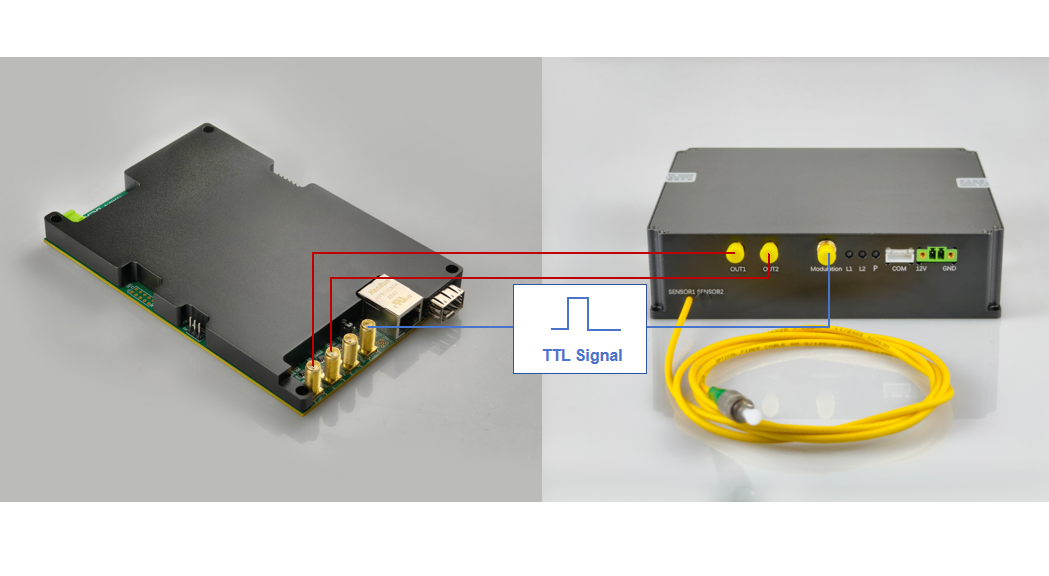
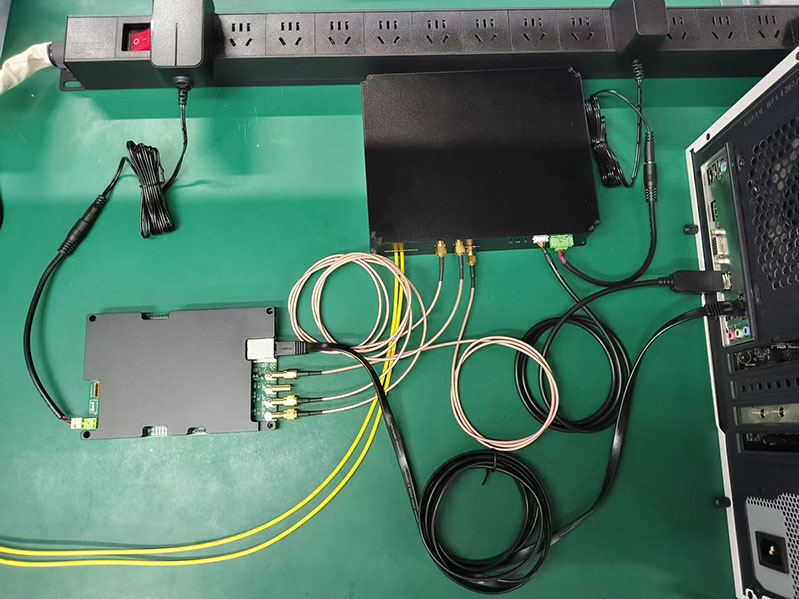
- Connect Channel 1 (Ch1) of the acquisition card to Channel 1 (Ch1) of the DAS module.
- Connect Channel 2 (Ch2) of the acquisition card to Channel 2 (Ch2) of the DAS module (if the DAS module has only one sensor channel, this connection is not necessary).
- The Trigger Out SMA on the acquisition card is connected to the modulation Port of the DAS module.
9.DAS Data Acquisition Card (GY-DAQ-2480-E) API Call Process
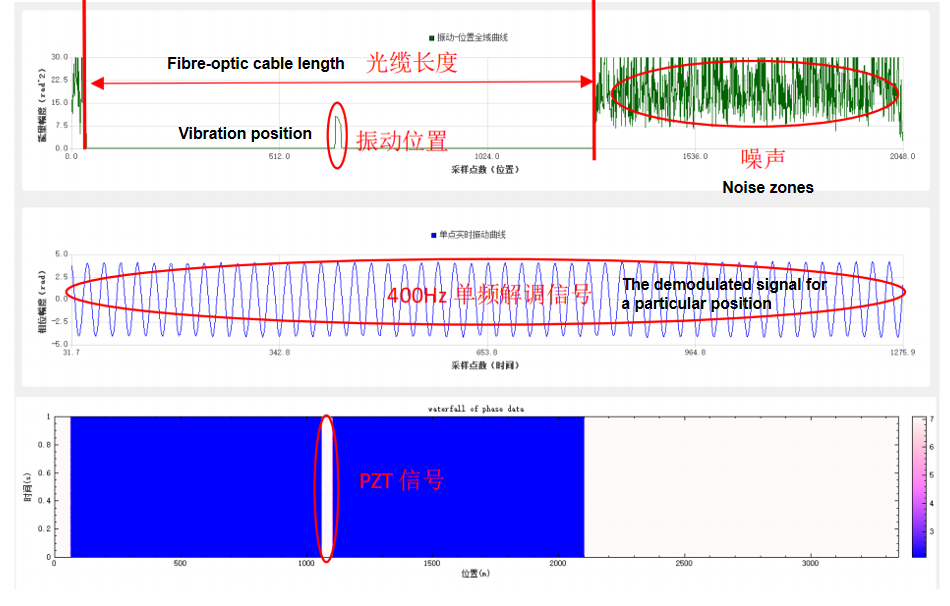
The diagram above shows our demodulation schematic, which enables us to obtain the vibration signals from the entire optical fibre cable following demodulation.
10.Software Development
Capture Card Communication Protocol: UDP.
Supported operating systems: Windows and Linux. Since it uses the UDP network protocol, no drivers need to be installed.
Programming languages: Programming languages: C, C++, Python, and other languages that support UDP programming are all acceptable.