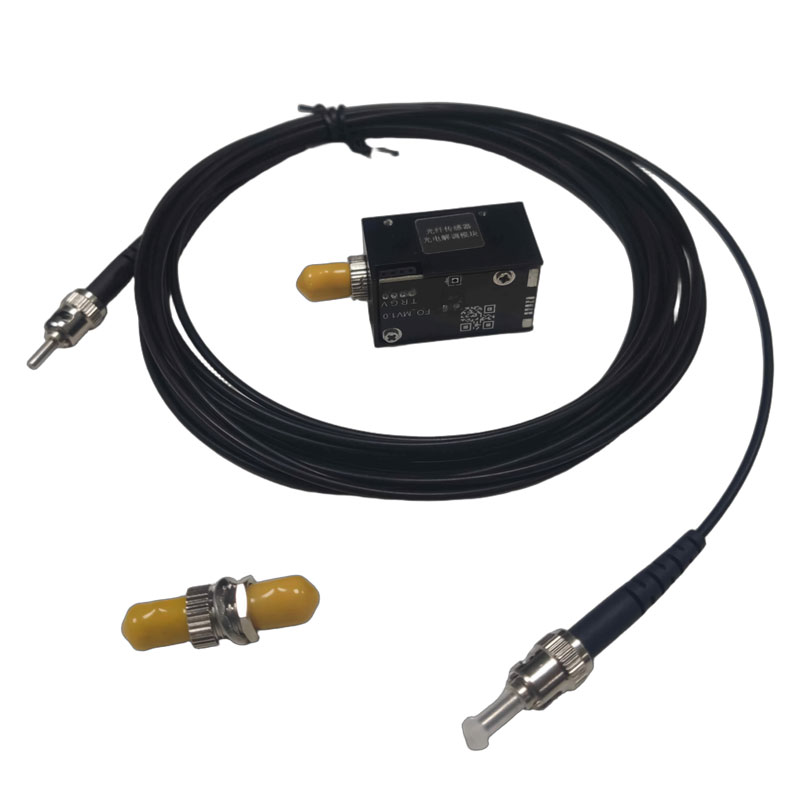
Fluorescent Fiber-Optic Temperature Sensor
Fluorescent fiber temp sensor; High-Voltage; Explosion-Proof;EMI-Resistant
 Huang
Email: Hqy@ybphotonics.com
Huang
Email: Hqy@ybphotonics.com
Introduction
Fluorescent fiber-optic temperature probes offer numerous advantages unmatched by other temperature sensors, including excellent electrical insulation, resistance to electromagnetic interference, resistance to chemical corrosion, and pollution-free operation. These features make fluorescent probes suitable not only for applications in biology, medicine, and other fields but also for the power industry, where they hold broad application prospects. They are primarily used for: temperature measurement of high-voltage electrical equipment and instruments, temperature measurement in generator diagnostic systems and between transformer windings, temperature measurement of high-voltage circuit breaker contacts, and temperature measurement of high-voltage cable joints.
Features
- Passive Temperature Measurement: The probe contains no circuitry or power source, ensuring intrinsic safety
- High Interference Resistance: Unaffected by strong electromagnetic fields, high voltage, or radio frequencies
- High Insulation: The optical fiber itself provides insulation, allowing direct use in high-voltage equipment
- High Resolution: 0.1°C
- Wide Temperature Range: -40°C to 200°C
- Compact Size: The probe is miniaturized and can be installed in confined spaces
Applications
- Power and Energy (Most Common Applications):High-voltage switchgear;Transformers / Reactors;GIS/GIL, high-voltage cables / connectors
- Petrochemicals / Flammable and Explosive Environments
- Subway electrical rooms or distribution panels
- Temperature measurement in special environments (explosion-proof, pyrotechnics)
Product Composition
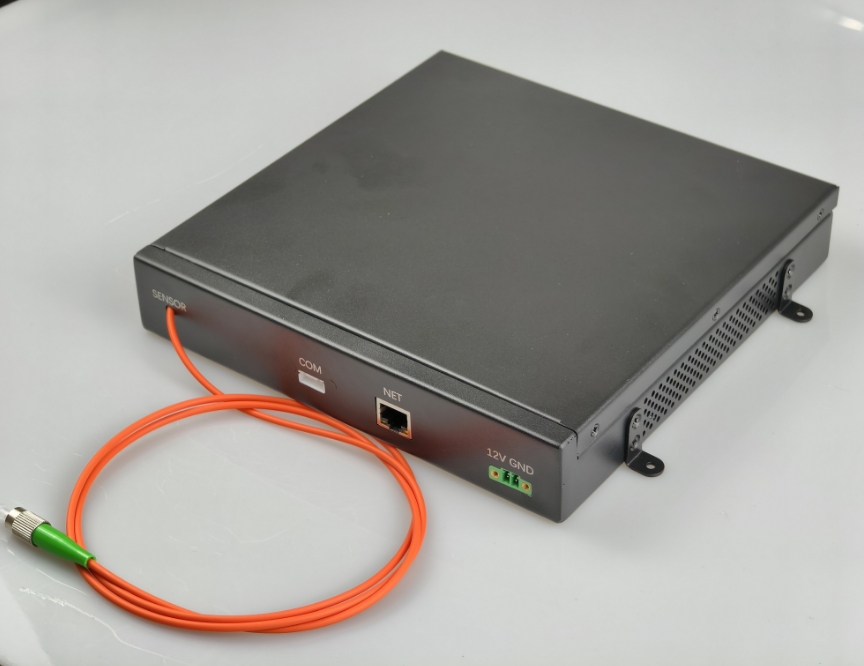
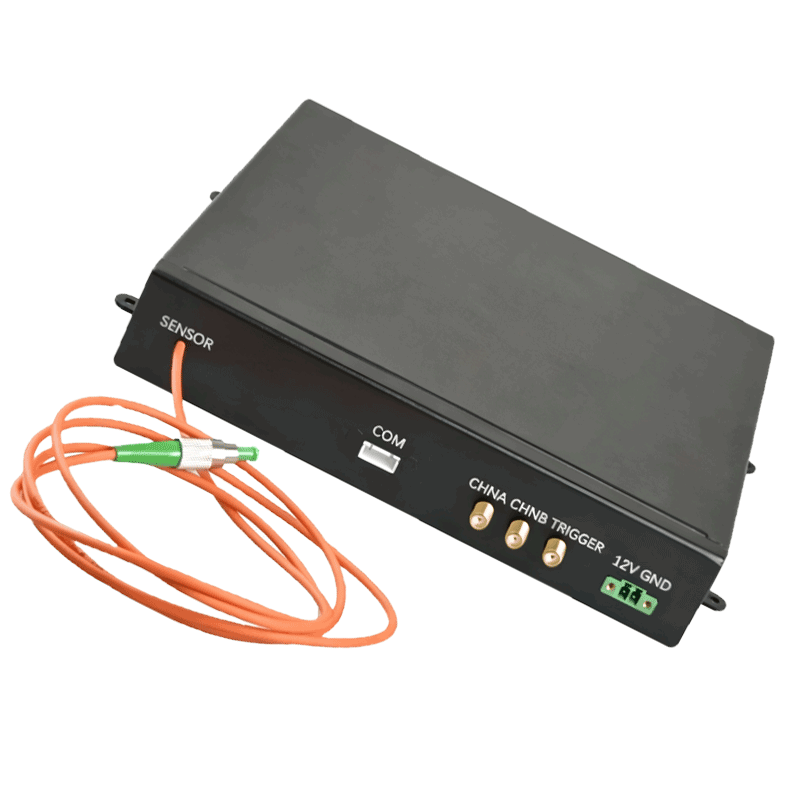
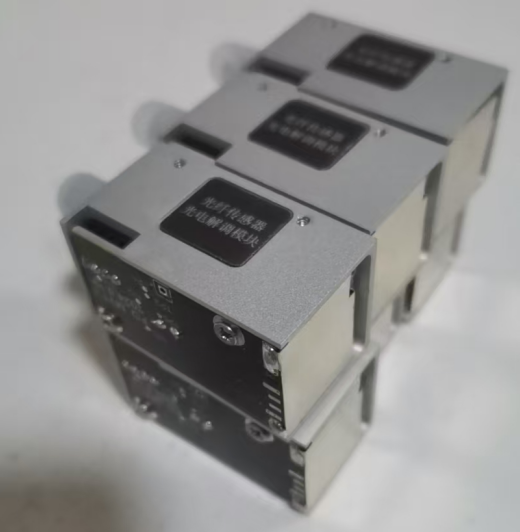
The fluorescent fiber-optic temperature measurement module consists primarily of a fluorescent fiber-optic sensor and a photoelectric conversion module.
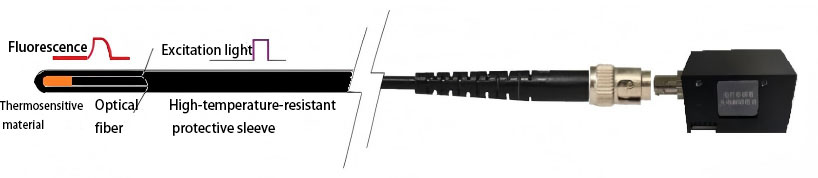
The fluorescent fiber-optic sensor consists of a fluorescent temperature-sensing probe, specialty quartz optical fiber, a high-temperature-resistant sheath, and an ST fiber-optic connector.
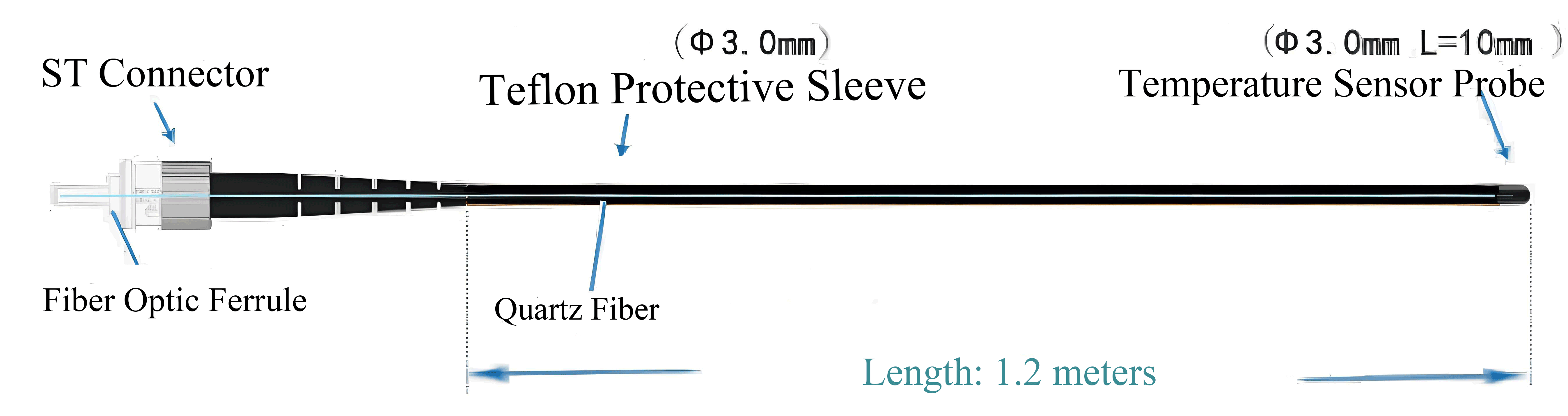
The optoelectronic conversion module converts the fluorescence returned by the temperature sensor probe into an electrical signal. A high-speed processor acquires and calculates the temperature corresponding to the fluorescence afterglow, which is then output via a serial communication interface.
Technical Specifications
| Power Supply | DC 5V |
|---|---|
| Total Power Consumption | 0.4W (80mA) |
| Temperature Measurement Range | -40°C to 200°C; |
| Measurement Accuracy | ±1°C |
| Resolution | 0.1°C |
| Optical Fiber Withstand Voltage | 100 kV/20 cm |
| Module Dimensions | 22 x 21 x 38 mm |
| Operating Temperature Range for Photoelectric Module | -40°C to 75°C |
| Operating Humidity Range for Photoelectric Module | <95% |
| Storage Temperature Range | -20°C to 80°C |
Sensor Probe Installation Methods
1.Secure using OT or UT bolts (at cable entry/exit points, bolt connections, etc.)
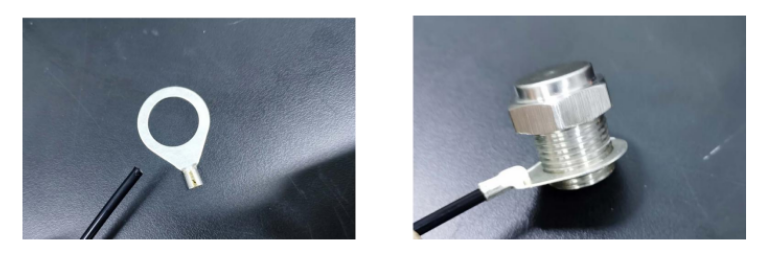
2.Secure using Teflon cable ties or high-temperature-resistant tape (for busbar and column temperature measurement)
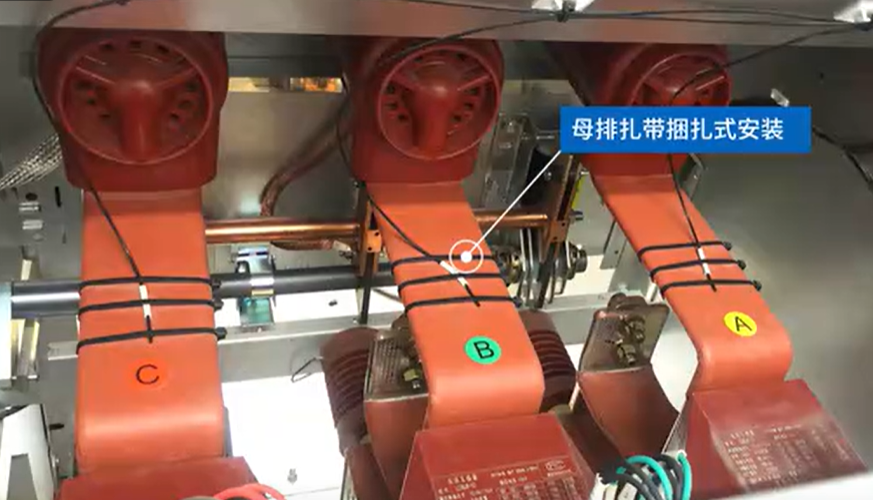
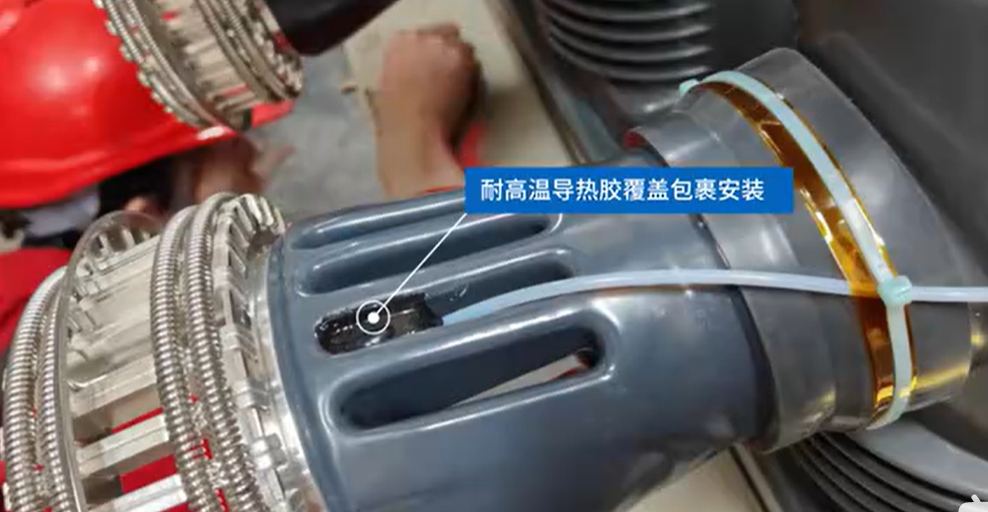
3. Install by covering and wrapping with high-temperature-resistant thermal adhesive (for temperature measurement on large flat surfaces)
Communication Protocol
| Communication Interface | 3.3V/TTL level (half-duplex UART); |
|---|---|
| Baud Rate | 9600 |
| Checksum | None |
| Communication Protocol | MODBUS; |
| Communication Address: | Default 1 (configurable; each module is labeled with an address number; address is one byte) Temperature Data Type: Signed short integer (shortint) |
| Checksum | uses CRC-16 (checksum in this example is 84 0A) |
| Temperature Coefficient | 0.1 (divide the read integer by 10 to obtain the actual temperature value) |
Order Information
If you need to integrate the sensor module into your system, select the quantity you need: YB-FFOT-x (where x represents the number of modules)
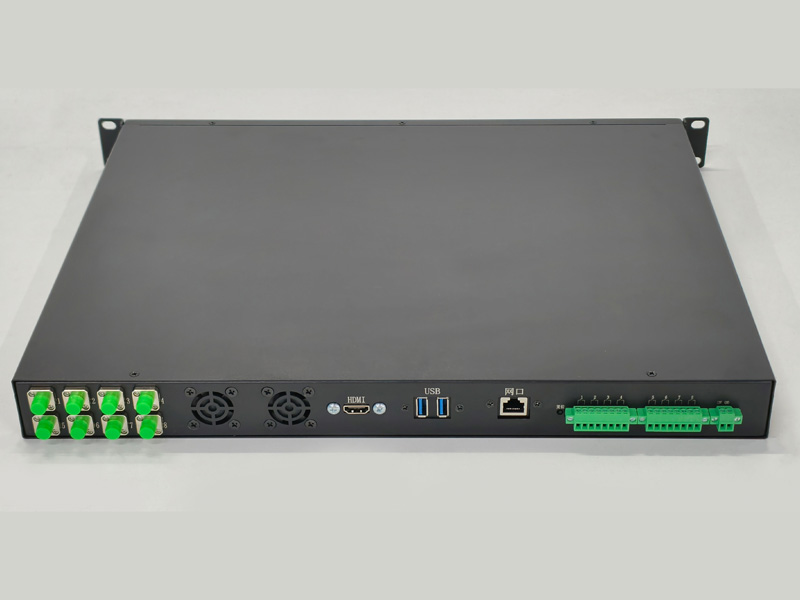
If you need a visual solution, you can customize a 12-channel fluorescent fiber-optic temperature transmitter (YB-FFOTT).
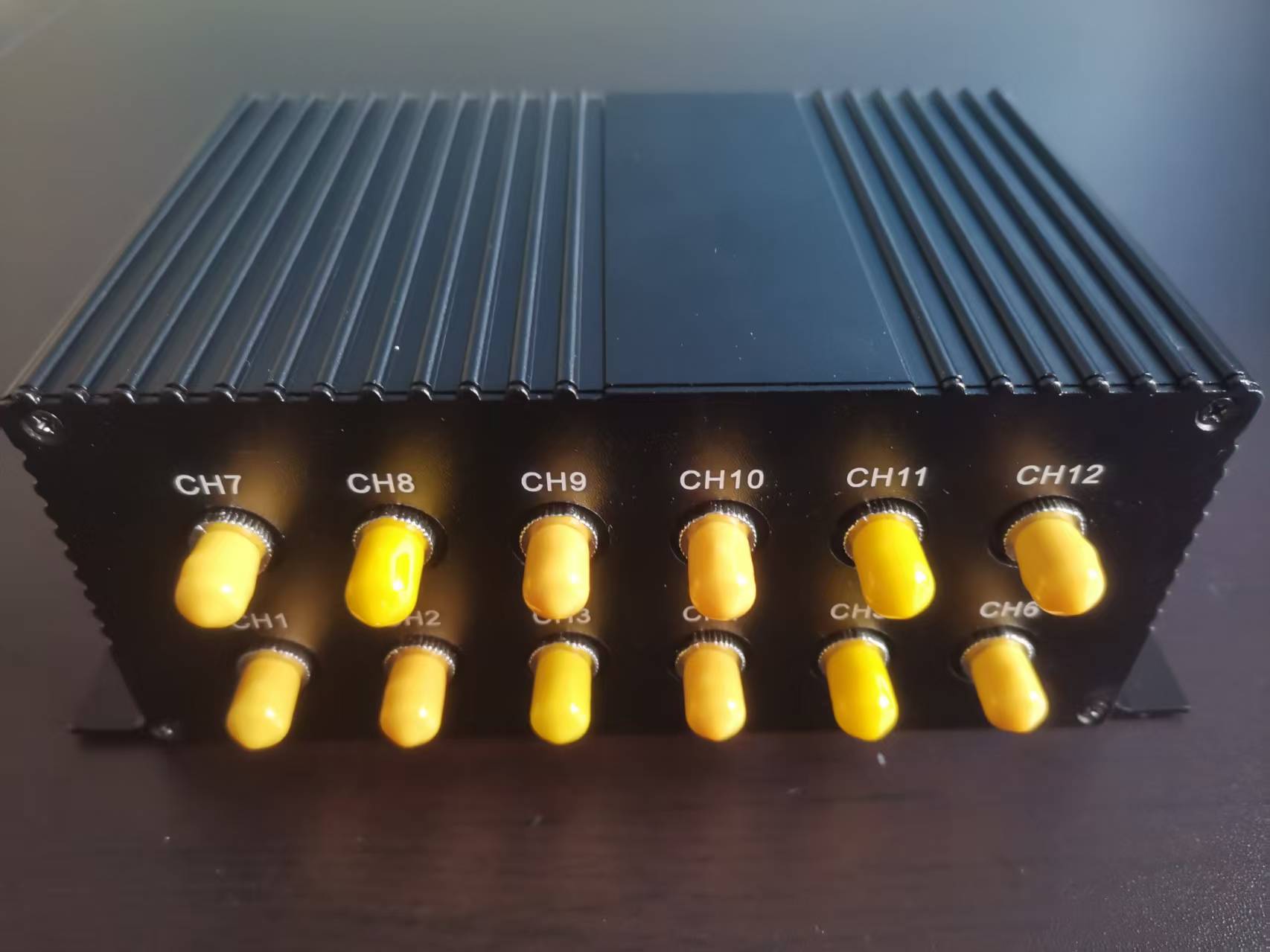
The fluorescent fiber-optic temperature transmitter is a key component of the digital fluorescent sensor system. It incorporates a fluorescent fiber-optic temperature sensing module, The module incorporates fluorescence acquisition and fluorescence lifetime modeling algorithms. It performs optoelectronic conversion and fitting on the temperature-correlated fluorescence curves returned by the fluorescence probe to obtain the temperature value from the fluorescence temperature probe. After circuit conversion, it transmits signals with RS485 communication, Ethernet communication, or 4-20mA current output, enabling monitoring systems to collect temperature data from the measurement points. It is widely used in applications such as fluorescence fiber optic temperature measurement for power transformers, temperature measurement of moving and stationary contacts in switchgear, temperature measurement of cable joints, and temperature measurement of busbar connection bolts.
Technical Specifications
- Supports segmented fiber optic temperature measurement;
- Supports long-distance fluorescent fiber optic temperature measurement, with fiber optic sensors up to 50 meters in length (fiber length can be customized to meet customer requirements);
- Supports up to 12 channels of fiber optic temperature measurement;
- Each channel features fully independent photoelectric conversion with no mutual interference;
- Each channel has an independent processor for real-time data acquisition (non-polling);
- Equipped with RS485 communication, MODBUS protocol, configurable baud rate, and configurable address;
- Equipped with Ethernet communication and MODBUS TCP protocol;
- Features 12 channels of 4-20mA current output, with each channel corresponding to the temperature of a single measurement channel;
- Features two-level alarm settings, with two dry contact outputs corresponding to Level 1 warning and Level 2 alarm outputs (normally open);
- Equipped with dry contact outputs (normally open) for device and sensor faults.
- Wide voltage input range: 85–305 VAC / 100–430 VDC;
- High resistance to electromagnetic interference; the internal data acquisition module features an independently shielded metal housing;
- Elliptical mounting holes on both sides of the transmitter for convenient and flexible installation;
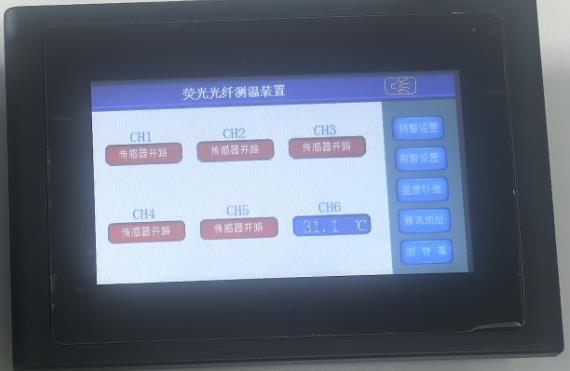
This system can be equipped with an LCD screen to display temperature monitoring data directly.